
When you first get into 3D printing, it can feel like you’re staring at a long menu of unfamiliar options. MJF, SLS, SLA, SLM, FDM—each one sounds technical, and each one claims to be the “best” at something. So, if you’ve ever asked yourself, “What is the best 3D printing technology?” the real answer is simple:
It depends on the part you need.
Every 3D printing process comes with strengths and trade-offs. Some are built for durability, some for detail, and some for affordability. The key is understanding what each technology does so you can match it to your project.
Below is a clear breakdown of the major 3D printing processes, how they work, and the pros and cons of each. At the end, we’ll explain why MJF is often the best overall choice for professional-grade parts.
1. MJF (Multi Jet Fusion)
MJF is one of the most advanced and well-rounded 3D printing technologies available. Instead of drawing each layer with a single point, MJF uses a fusing agent and heat across full passes of nylon powder. This makes it fast, consistent, and highly detailed.
At JawsTec, MJF is our go-to service because it delivers strong, accurate parts with a smooth finish—ideal for both prototypes and production runs.
Pros
-
Strong, durable parts ideal for functional applications
-
Excellent dimensional accuracy
-
Smooth surface finish compared to other powder-based methods
-
Great for batches or single parts
-
Faster turnaround times
Cons
-
Mostly limited to nylon materials such as PA11 and PA12
-
More expensive than basic FDM printing
2. SLS (Selective Laser Sintering)
SLS also uses nylon powder, but instead of a fusing agent, it relies on a laser to draw each layer. This process creates tough, lightweight parts that handle mechanical stress well—especially when geometry gets complex.
Pros
-
Strong, lightweight parts
-
No support structures needed
-
Great for complex geometry
Cons
-
Rougher surface finish than MJF
-
Slightly lower accuracy than MJF
-
Longer print and cooling times
3. SLA (Stereolithography)
SLA cures liquid resin with a UV laser. Because it builds with light rather than heat, SLA achieves extremely high detail and some of the smoothest surface finishes in 3D printing.
Pros
-
High-quality surface finish similar to injection molding
-
Very high detail and accuracy
-
Great for miniatures, prototypes, and visual models
Cons
-
Resin is more brittle than nylon or metal
-
Parts can warp from heat or UV exposure
-
Not ideal for structural or load-bearing parts
4. SLM (Selective Laser Melting)
SLM is a true metal printing process. A high-powered laser fully melts metal powder into solid layers, producing parts with performance similar to machined metal.
Pros
-
Extremely strong, fully metal parts
-
Great for aerospace, automotive, and high-stress applications
-
Can produce shapes traditional machining can’t achieve
Cons
-
Very expensive
-
Requires extensive post-processing
-
Not practical for basic prototypes
5. FDM (Fused Deposition Modeling)
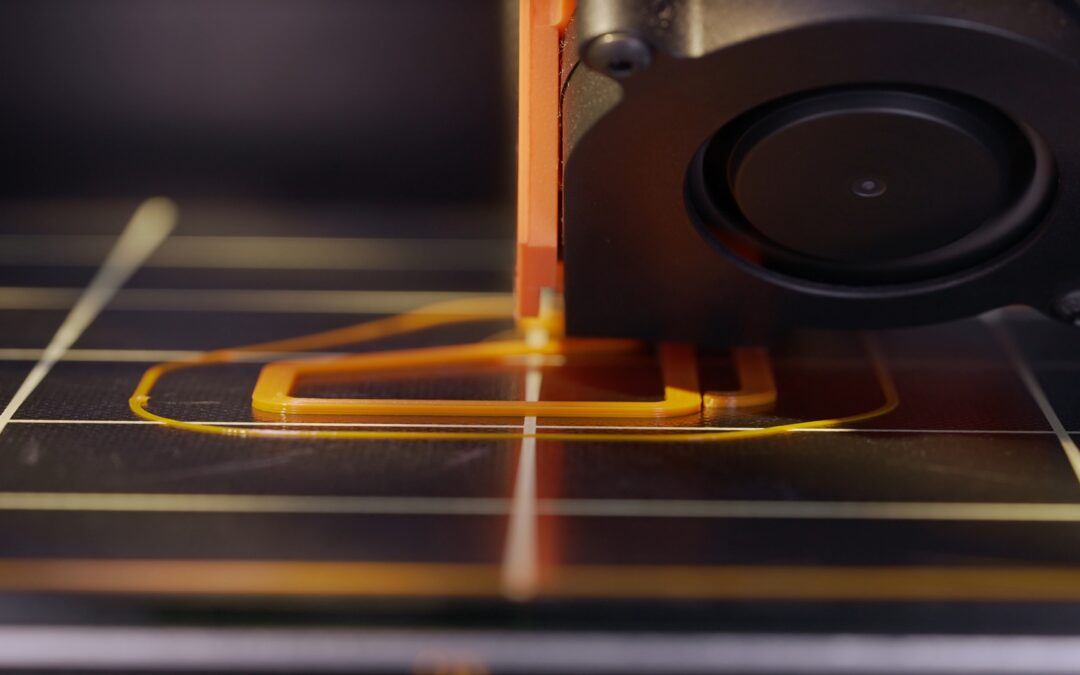
Fused Deposition Modeling (FDM) is the most familiar and accessible printing method—used by hobbyists, small shops, and even some professional teams. It melts plastic filament and lays it down layer by layer, making it ideal for simple, affordable prototypes.
Pros
-
Low cost
-
Wide material selection
-
Great for quick prototypes or large prints
Cons
-
Visible layer lines
-
Lower strength than nylon or metal printing
-
Less accurate for fine details
Conclusion: Which 3D Printing Technology Is Best?
There’s no universal “best” technology—just the best one for your part. It all comes down to material needs, strength requirements, surface quality, and budget.
| Technology | Primary Material | Strength Level | Surface Finish | Detail Accuracy | Cost Level | Best For | Key Limitations |
|---|---|---|---|---|---|---|---|
| MJF (Multi Jet Fusion) | Nylon (PA11, PA12) | High | Smooth (for powder-based) | Very High | Medium | Functional prototypes, end-use parts, batch production | Limited mostly to nylon materials |
| SLS (Selective Laser Sintering) | Nylon | High | Slightly rough / grainy | High | Medium | Complex geometries, durable mechanical parts | Rougher finish, longer cooling time |
| SLA (Stereolithography) | Resin | Medium–Low (brittle) | Very Smooth | Extremely High | Medium | High-detail models, visual prototypes, miniatures | Brittle material, UV sensitivity |
| SLM (Selective Laser Melting) | Metal (Aluminum, Steel, Titanium) | Very High | Machined after finishing | Very High | Very High | Aerospace, automotive, structural metal parts | Expensive, heavy post-processing |
| FDM (Fused Deposition Modeling) | Thermoplastics (PLA, ABS, PETG, etc.) | Low–Medium | Visible layer lines | Moderate | Low | Quick prototypes, large simple parts | Lower strength and precision |
For most professional applications, MJF stands out. It consistently delivers strong, accurate, and production-ready nylon parts with competitive speeds and excellent detail. That’s why it’s often the top choice for both prototyping and end-use manufacturing across many industries.
FAQ’S
Q1: Which 3D printing technology is best for functional parts?
A: For strong, functional parts, MJF and SLS are usually the best choices. MJF offers excellent strength and smooth finishes, while SLS is ideal for complex geometries and durable nylon parts.
Q2: What 3D printing process is best for high-detail models?
A: SLA is perfect for detailed, visually precise prints, such as miniatures or prototypes, because it uses a UV laser to cure resin layer by layer.
Q3: Can I use FDM for professional-quality parts?
A: FDM is affordable and great for quick prototypes or large prints, but it usually lacks the strength, accuracy, and fine detail needed for professional-grade components.
Q4: What are the advantages of MJF over SLS?
A: MJF prints faster, delivers smoother surface finishes, and offers better dimensional accuracy. It’s also ideal for both single parts and batch production.
Q5: Is metal 3D printing worth it?
A: SLM (Selective Laser Melting) is perfect for high-stress applications in aerospace or automotive industries. It produces fully metal, extremely strong parts, but it’s expensive and requires post-processing.
Q6: How do I choose the right 3D printing technology?
A: Consider the part’s material, strength requirements, surface finish, and intended use. For most professional applications, MJF provides the best balance of quality, speed, and reliability.
Q7: Can I mix technologies for one project?
A: Yes. Many teams prototype in FDM for speed and cost, then move to MJF or SLS for final production to combine efficiency with quality.