
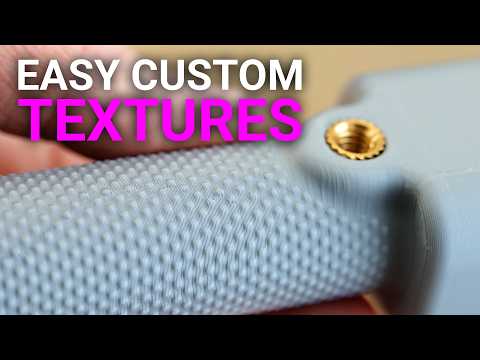
Why Surface Texture Matters in Industrial AM
Surface finish impacts more than aesthetics. For industrial applications, 3D print surface textures affect grip, wear resistance, and part functionality. Engineers need precise control over these characteristics.
Traditional “fuzzy skin” settings in slicers create random surface roughness. This works for some applications. However, it lacks the precision industrial projects demand.
Stefan Hermann from CNC Kitchen recently introduced BumpMesh, a tool that offers far more control. Let’s examine how displacement-based texturing benefits professional manufacturing.
Limitations of Traditional Fuzzy Skin
Fuzzy skin settings randomize nozzle movements during printing. The result is an organic, rough texture. While useful, this approach has significant drawbacks.
- No control over pattern geometry or depth
- Inconsistent results across different geometries
- Cannot create functional grip patterns
- Difficult to replicate across production runs
For prototyping consumer products or functional parts, these limitations matter. Procurement teams need repeatable specifications they can document.
The Displacement Mapping Alternative
Displacement mapping applies grayscale images to mesh surfaces. White areas push outward. Black areas remain unchanged. This creates predictable, controllable textures.
BumpMesh implements this technique in a browser-based tool. No software installation required. The tool modifies STL files directly before sending to production.
Industrial Applications for Controlled Textures
Why does this matter for professional manufacturing? Several applications benefit from precise surface control.
Ergonomic Grips and Handles
Tool handles and equipment grips need specific textures. Diamond patterns, cross-hatching, or custom geometries improve user safety. Displacement mapping allows engineers to specify exact patterns.
Friction and Wear Surfaces
Some parts need controlled friction coefficients. Others require wear-indicating surfaces. Precise texture depth and geometry affect both properties.
- Conveyor components with specific grip patterns
- Fixtures requiring consistent hold force
- Wear surfaces with depth indicators
- Anti-slip housings for industrial equipment
Aesthetic Consistency Across Production
When producing end-use parts, consistency matters. Random textures vary between prints. Displacement-based textures remain identical across batches.
Process Considerations for Textured Parts
Different selective laser sintering and Multi Jet Fusion processes handle textures differently. Powder-based methods often capture fine detail better than extrusion processes.
Part orientation also affects texture quality. Features facing the build plate may lose definition. Learn more about why orientation matters in 3D printing for textured parts.
Design Guidelines for Textured Surfaces
Keep texture depth proportional to part size. Extremely shallow textures may not resolve. Very deep textures can compromise wall integrity.
Consider post-processing requirements too. Some finishing techniques may reduce texture definition. Plan your workflow accordingly.
Implementation for Production Parts
Ready to specify textured surfaces on your next project? JawsTec can help evaluate whether displacement-based textures suit your application.
Provide clear specifications including pattern type, depth requirements, and functional goals. This helps production teams optimize orientation and process parameters.
Request a quote with your textured STL files. Include notes about functional requirements so engineers can recommend the best process.
Key Takeaways
Displacement mapping offers significant advantages over random fuzzy skin textures. For industrial applications requiring repeatability and precision, this approach delivers better results.
Consider surface texture early in your design process. The right texture improves functionality, aesthetics, and user experience in end-use parts.
Sources
Source: Stop Using Fuzzy Skin – I made something better! by CNC Kitchen (YouTube) — https://www.youtube.com/watch?v=rTBkjR7JvzI