
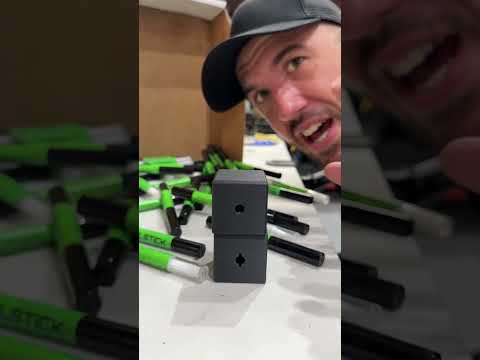
Why Your 3D Printed Holes Are Always Too Small
If you’ve ever designed a part with holes, you’ve likely noticed something frustrating. The holes come out smaller than your CAD model specifies. This isn’t a printer error—it’s physics.
Industrial 3D printing manufacturer Slant 3D recently addressed this common engineering challenge. Understanding why holes shrink helps you design parts that work the first time.
Getting 3D printed holes right matters for fastener fits, bearing housings, and assembly interfaces. Let’s explore the science and practical solutions.
The Physics Behind Hole Shrinkage
Holes shrink because of how material behaves during printing. Thermal contraction pulls material inward as it cools. This affects circular features more than straight walls.
The printer’s toolpath also contributes to undersized holes. When printing curves, the deposited material rounds inward slightly. This happens regardless of your printer’s calibration.
Layer-by-Layer Considerations
Each layer adds to the dimensional variance. Material sags microscopically before solidifying. These tiny deviations compound across the hole’s depth.
Horizontal holes face additional challenges. The unsupported top of the hole tends to droop. This creates oval-shaped openings instead of perfect circles.
Compensation Strategies That Work
Smart engineers build compensation into their designs. Don’t rely on post-processing to fix dimensional issues. Design it right from the start.
Oversizing Your Holes
The most straightforward fix is making holes larger in CAD. A common starting point is adding 0.2-0.4mm to your diameter. Your specific offset depends on material and process.
Consider these factors when determining compensation:
- Material type and shrinkage rate
- Hole diameter (smaller holes need more compensation)
- Printing orientation relative to the hole axis
- Required tolerance class for your application
Orientation Matters
Vertical holes print more accurately than horizontal ones. When possible, orient your part so critical holes print vertically. This eliminates the bridging issue entirely.
For horizontal holes that can’t be reoriented, consider these approaches:
- Use teardrop or diamond-shaped holes that self-support
- Design for post-machining on critical dimensions
- Accept looser tolerances where function allows
- Specify support structures for highest accuracy
Process-Specific Considerations
Different industrial processes handle holes differently. Multi Jet Fusion (MJF) produces excellent small features. The powder-bed process supports holes from all directions.
Selective Laser Sintering (SLS) offers similar advantages for hole accuracy. Both processes eliminate the bridging concerns of extrusion-based methods.
Material Selection Impact
Different materials shrink at different rates. Nylon-based materials have predictable, well-documented shrinkage. Work with your manufacturing partner to understand material-specific offsets.
Crystalline materials shrink more than amorphous ones. This affects your compensation calculations significantly. Always test critical dimensions before production runs.
Design Guidelines for Production Parts
Follow these principles for reliable hole dimensions in production:
First, communicate your tolerance requirements clearly. Not every hole needs tight tolerances. Specify which features are critical versus which have flexibility.
Second, consider hybrid approaches. Print undersized and ream to final dimension. This works well for press-fit applications requiring maximum precision.
Third, test before committing to production. Order samples from JawsTec to validate your compensation values. A small investment in prototyping prevents expensive production issues.
Working With Your Manufacturing Partner
Experienced industrial 3D printing services understand these challenges. JawsTec’s engineering team can recommend process-specific compensations. They’ve dialed in offsets for thousands of production parts.
Share your functional requirements, not just dimensions. A clearance hole needs different treatment than an interference fit. Context helps your manufacturing partner deliver the right solution.
Getting 3D printed holes right isn’t difficult once you understand the fundamentals. Design with compensation in mind, choose the right process, and partner with experienced manufacturers.
Sources
Source: Most People Design 3D Printed Holes Wrong by Slant 3D (YouTube) — https://www.youtube.com/watch?v=8QT-Am7tQJ8