
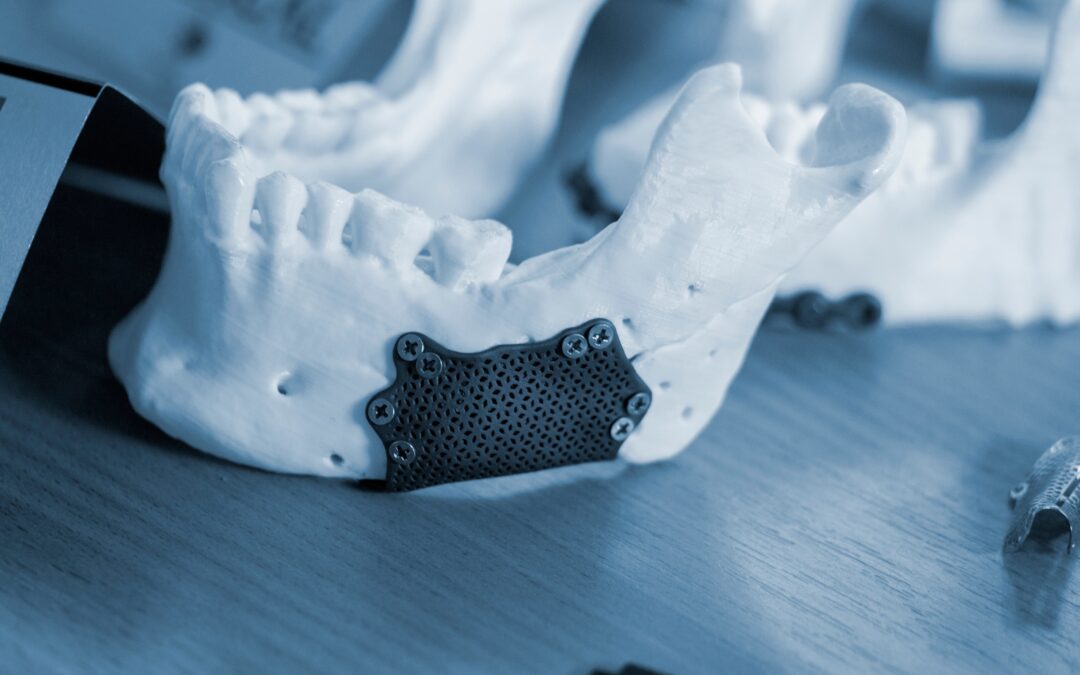
Medical schools used to teach anatomy with textbooks, plastic models, and donated bodies called cadavers. These tools worked, but they had limits. Textbooks are flat. Cadavers are expensive, hard to get, and don’t last forever. Today, medical 3d printing is changing how future doctors, nurses, and surgeons learn.
With medical 3d printing, schools can build exact copies of human body parts. A professor can print a heart, a spine, or even a full skull. Students can hold these models, turn them over, and look inside them. This kind of hands-on learning helps ideas stick better than a picture in a book ever could.
Why Medical 3D Printing Matters in the Classroom
Learning anatomy is hard. Bodies are complicated, and every person’s body is a little different. Medical 3d printing lets teachers show that variety in a real way. Instead of one generic model, a class can study printed organs from real patient scans. This shows students what a healthy heart looks like next to one with a defect, side by side.
3D printed models are also reusable and safe. Students can practice cutting, drilling, or placing an implant on a printed model without any risk to a real patient. If a model breaks or gets worn out, the school can simply print another one. This makes practice cheaper and easier to repeat as many times as needed.
Better Surgical Training
Surgeons in training used to learn techniques mostly by watching others or practicing on cadavers. Now, many surgical programs use 3d printed models of a patient’s actual anatomy before a real operation. This process is called rapid prototyping, and it lets medical teams build and test designs in days instead of weeks, which speeds up how fast new surgical tools and training models reach students. Practicing on a printed model that matches a real patient’s body helps young surgeons plan tricky procedures and build confidence before they ever pick up a real scalpel.
Medical 3d printing also supports the creation of custom surgical guides and tools used in training labs. These guides teach students the exact angles and paths a real surgery might require. Because each model is made to order, schools can build training kits for almost any condition, from a broken bone to a rare tumor.
Making Education More Equal
Not every school can afford dozens of cadavers or expensive imported models. Medical 3d printing helps close that gap. A school just needs a design file and a printer to create teaching tools. This means smaller colleges and nursing programs, not just big research universities, can give students the same hands-on experience.
Printed models can also be shared as digital files. A design used at one school can be sent electronically and printed at another school across the country. This makes it easier for teachers everywhere to use the same high-quality models in their lessons.
Simulating Rare Conditions
Some medical conditions are rare, so students may never see them during regular training. With medical 3d printing, a school can create a model of a rare tumor, a birth defect, or an unusual bone break. Students get to study and even practice on these hard-to-find cases before they meet one in real life. This kind of preparation can make a real difference in patient care later on.
Where This Technology Comes From
Behind every printed medical model is a manufacturing process that turns a digital file into a solid object, layer by layer. This same process is used across many industries, including education 3D printing programs that teach students how design and manufacturing work together. Companies that specialize in medical 3D printing use industrial-grade printers and materials to create parts that are accurate down to a fraction of a millimeter, which matters when a model needs to match a real patient’s anatomy.
Choosing the right material also plays a role in how useful a training model turns out to be. Some programs use durable nylon for models that get handled often, while others need finer detail for delicate anatomy. Schools that want a custom model built from a CAD file or a scan can also work with 3D design services to turn an idea into a printable file.
The Future of Healthcare Education
Medical 3d printing is still growing. As printers get faster and materials improve, models will become even more realistic and affordable. Some schools are already experimenting with printed models that mimic the feel of real tissue, giving students an even closer experience to real surgery.
What started as a tool for engineers has become one of the most useful tools in healthcare education. By giving students something they can touch, study, and practice on, medical 3d printing is helping build a new generation of doctors and nurses who are better prepared on day one.
Want to learn more about how 3D printing supports different industries? Check out the JawsTec blog for more articles or contact us to talk about a custom medical 3D printing project.