
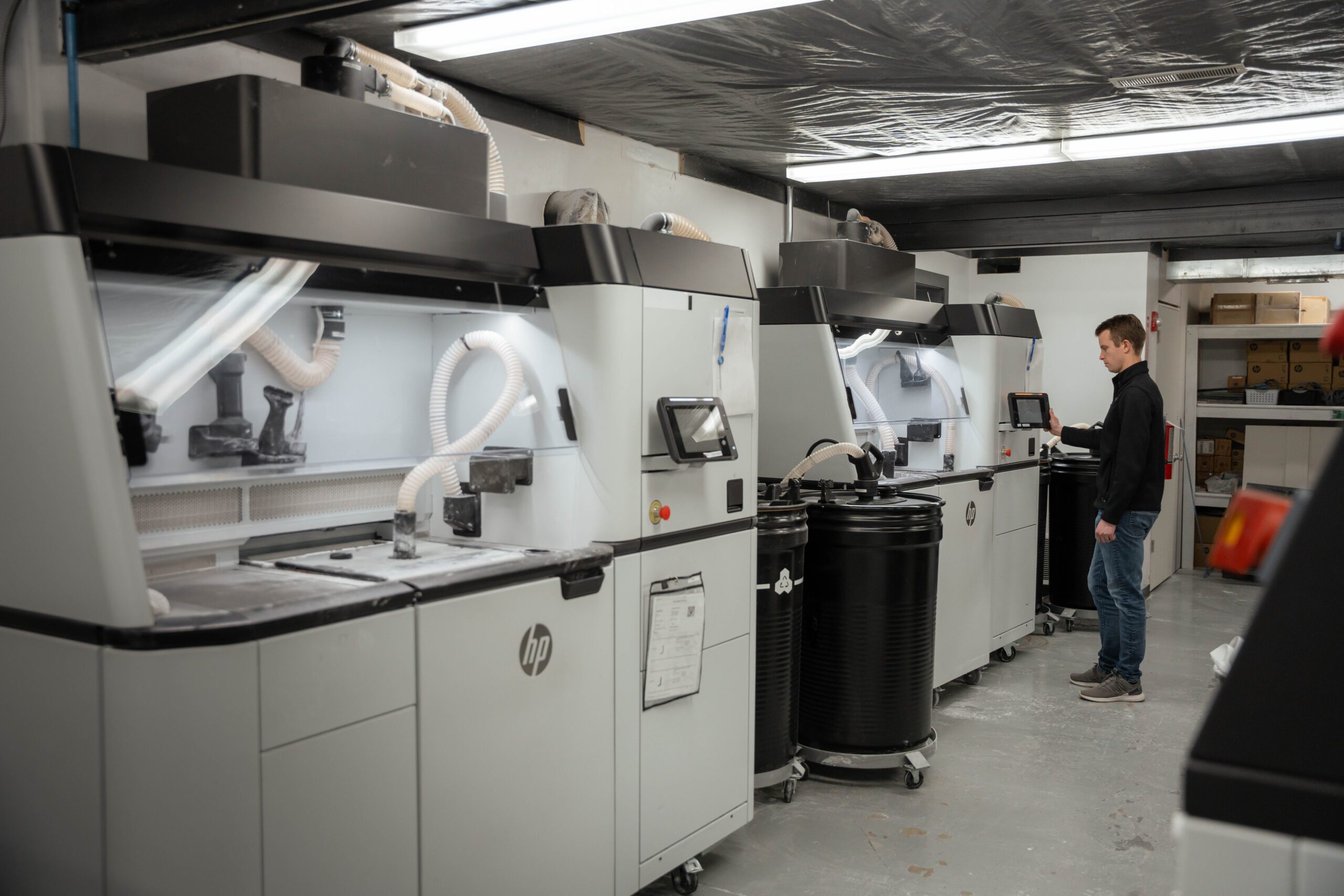
Production 3D Printing Services
Scalable additive manufacturing built for repeatability, strength, and real-world performance.
All Uploads are Confidential and Secure
Last Updated:

What Is Production 3D Printing?
Production 3D printing refers to the use of industrial additive manufacturing systems to produce functional, end-use parts at scale. Unlike basic prototyping, production printing focuses on repeatability, batch consistency, and long-term part performance.
To better understand where it fits, it helps to define the stages of manufacturing.
Prototyping
Prototyping is the early development phase where a part is tested for fit, function, strength, and design validation. The goal is to evaluate performance and make improvements before committing to production.
Low-Volume Manufacturing
Low-volume manufacturing refers to producing a smaller quantity of parts, typically ranging from dozens to several thousand units. This approach is ideal when demand is limited, fluctuating, or not high enough to justify expensive tooling.
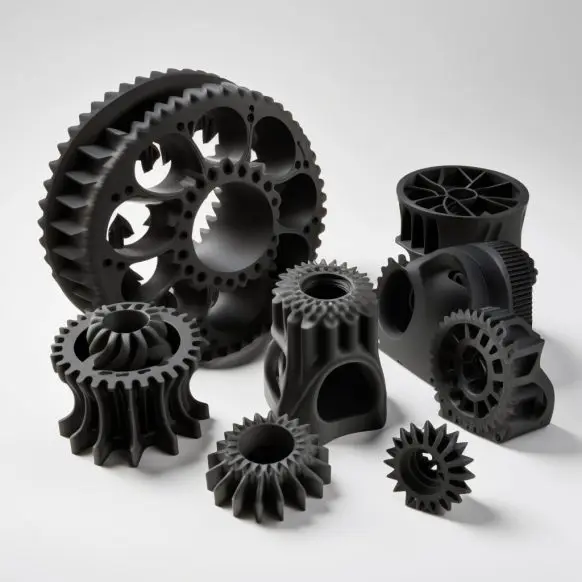
Production Manufacturing
Production manufacturing focuses on repeatable, scalable output. Parts are manufactured with consistent quality across batches and ongoing runs, often for end-use applications.
At JawsTec, we support the full manufacturing lifecycle. From early prototypes to low-volume manufacturing and full production runs, our industrial 3D printing systems are built to scale with your project. Whether you need 25 parts or ongoing production quantities, we provide structured workflows to ensure consistency and performance at every stage.
When Production 3D Printing Makes Sense
Production 3D printing is a strategic manufacturing choice when flexibility, speed, and cost control matter.
Design Flexibility
3D printing builds parts layer by layer, enabling complex geometries that traditional manufacturing cannot easily achieve, including internal channels, lattice structures, and part consolidation without added tooling. This gives engineering teams the freedom to iterate quickly and improve performance without restarting the manufacturing process.
Ideal for Low to Mid-Volume Production
When volumes fluctuate or stay below injection molding thresholds, additive manufacturing offers a strong cost-to-performance balance. It is well suited for runs of 50 to several thousand parts, replacement components, short-run production, and bridge manufacturing before investing in tooling.
Lightweighting Opportunities
3D printing enables optimized geometry and internal structures that reduce weight without sacrificing strength. Compared to machined or cast components, printed parts often achieve significant weight savings through material efficiency and part consolidation. This is especially valuable in automotive, aerospace, robotics, and performance applications where lower weight improves overall efficiency and performance.
Technologies We Use for Production
Our production 3D printing services are powered by industrial additive manufacturing systems designed for strength, repeatability, and scalable output. We select the right process based on part geometry, material requirements, and production volume.

MJF (Multi Jet Fusion)
Multi Jet Fusion uses a fusing agent and heat to produce dense nylon parts with strong mechanical properties and consistent batch quality. It is well suited for medium to high-volume production where strength, dimensional stability, and repeatability matter. Part nesting also improves throughput and lowers per-unit cost.
Best for: Automotive brackets, enclosures, housings, functional assemblies, and end-use production parts.

SLS (Selective Laser Sintering)
Selective Laser Sintering uses a laser to fuse powdered nylon layer by layer, producing durable parts with strong mechanical properties and chemical resistance. It excels at complex geometries and internal features without support structures, making it ideal for functional prototypes and low-volume production.
Best for: Functional nylon parts, complex geometries, short-run manufacturing.
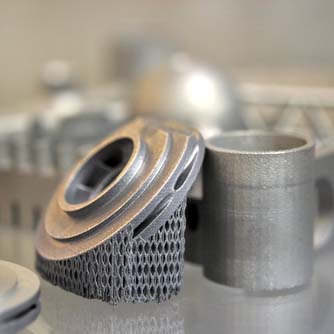
SLM (Selective Laser Melting)
Selective Laser Melting is a metal additive process that uses a high-powered laser to fully melt metal powder into dense, structural components. It produces strong parts for demanding industrial applications and enables complex internal channels and lightweight lattice structures that are difficult to achieve with traditional machining.
Best for: Aerospace brackets, structural components, high-load applications, and lightweight metal assemblies.
Materials for End-Use Production
Selecting the right material is critical for long-term performance. Our production 3D printing services support industrial-grade materials designed for strength, durability, and real-world applications.

PA12S
PA12S delivers similar mechanical performance to standard PA12 with improved surface consistency and repeatability. It is ideal for higher-volume production where uniform appearance and dimensional stability are essential.
Best for: Scalable production parts that require consistent batch quality.
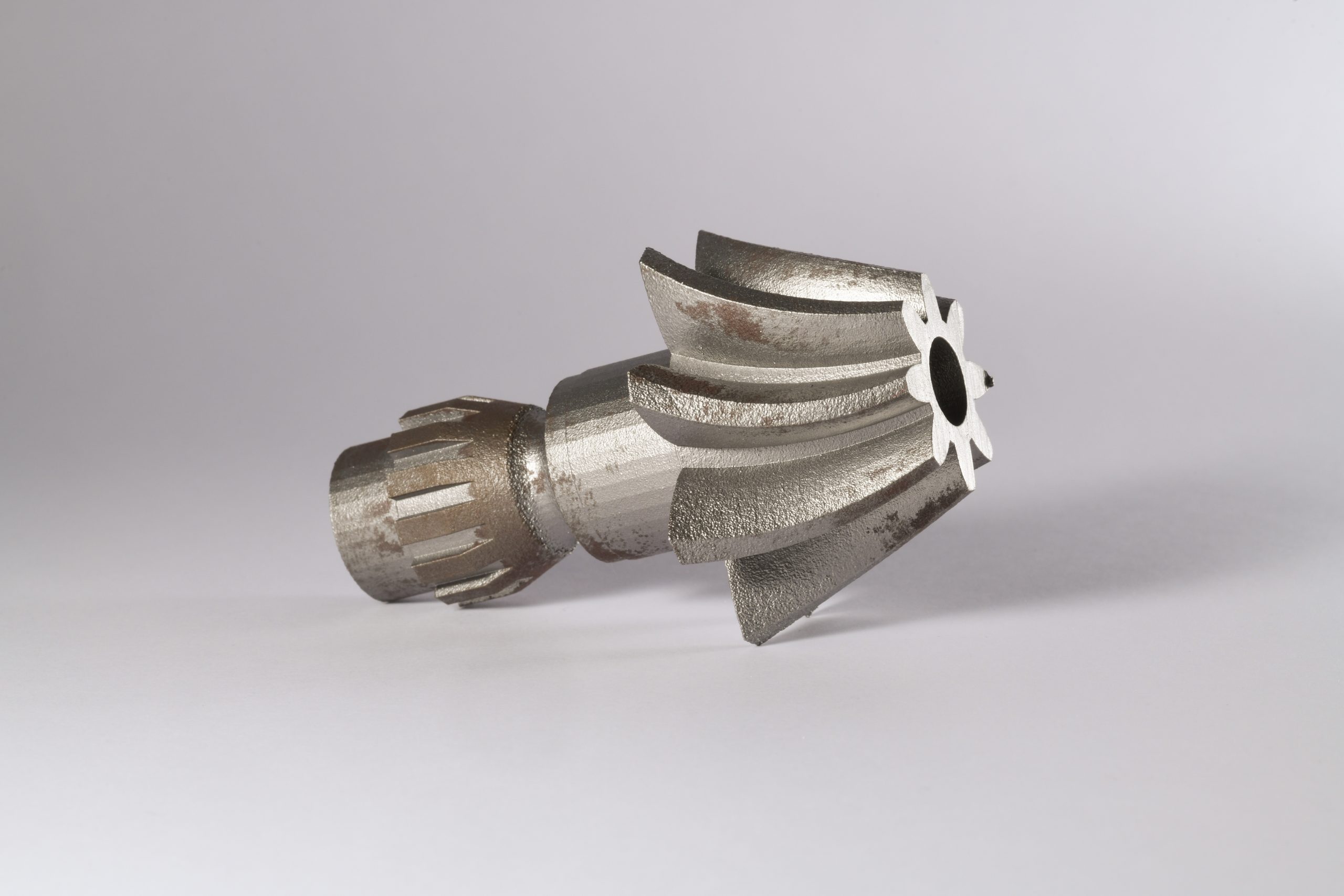
Stainless Steel (316L and 17-4PH)
Stainless steel 3D printing offers high strength, corrosion resistance, and long-term durability. 316L performs well in harsh environments due to its corrosion resistance, while 17-4PH provides higher strength and hardness after heat treatment.
Best for: Structural components, aerospace brackets, industrial tooling, and high-load applications.
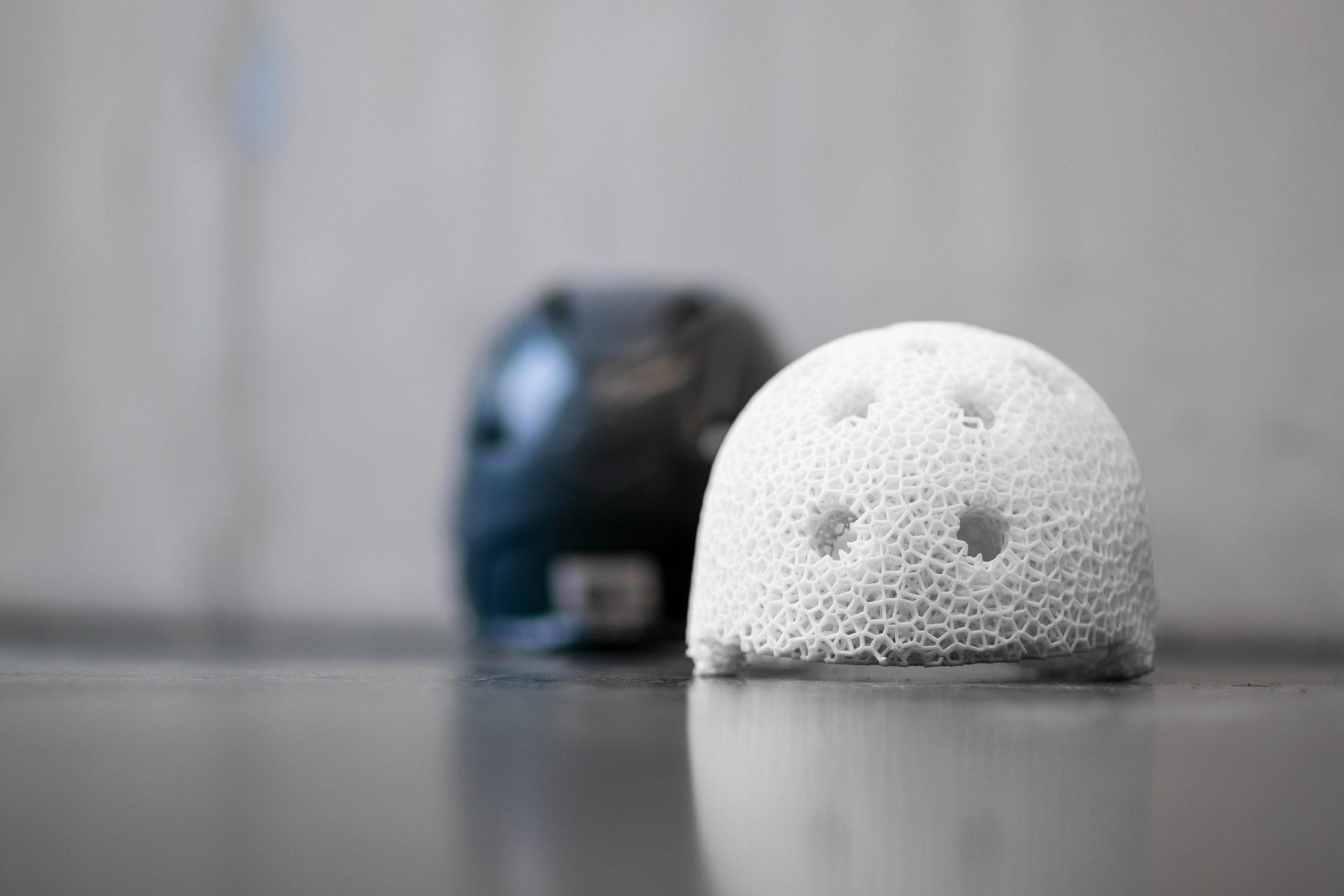
TPU (Thermoplastic Polyurethane)
TPU is a flexible material that provides elasticity, abrasion resistance, and impact absorption. It performs well in applications where parts need to bend, compress, or absorb vibration.
Best for: Seals, gaskets, protective covers, and vibration-dampening components.

Glass-Filled Nylon
Glass-filled nylon offers greater stiffness and heat resistance than standard nylon, making it ideal for load-bearing parts that need added rigidity while remaining lighter than metal.
Best for: Structural housings, mounting brackets, and industrial machine components.
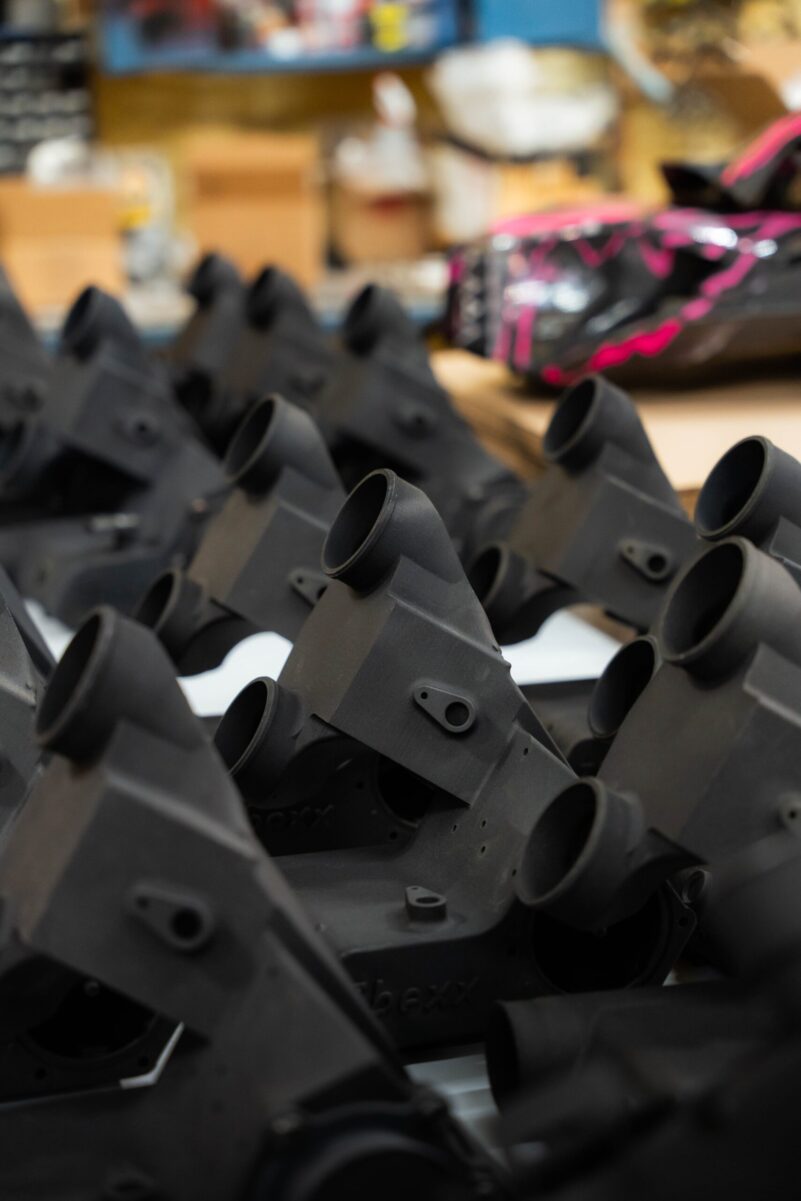
Scalability and Capacity
Reliable production requires both capacity and control. We operate a fleet of industrial 3D printing systems built for consistent, scalable manufacturing.
Our machines offer larger build volumes and higher throughput than desktop printers, allowing us to produce bigger parts, nested batches, and higher quantities in a single cycle. Depending on geometry and material, builds can be completed in as little as 10–24 hours, moving quickly into post-processing and fulfillment.
Internal tracking systems monitor builds, batch data, and quality checkpoints to ensure traceability and repeatable performance across production runs.
Whether you need short runs or ongoing volume production, our capacity and structured workflow are designed to keep your supply chain moving.
Quality Control and Repeatability
Consistent production requires structured process control at every stage.
Before each build, our technicians review geometry, wall thickness, orientation, tolerances, and material selection. If anything looks off, we confirm design intent before printing to prevent delays and ensure performance from the start.
Every production order then moves through multiple quality checks:
-
After unpacking – Parts are inspected for integrity, surface condition, and dimensional accuracy.
-
After post-processing – Dyeing, vapor smoothing, machining, or insert installation is verified for finish quality and stability.
-
Before shipping – Final inspection confirms quantity, specifications, and overall quality.
For assemblies with threaded inserts or hardware, we follow documented placement instructions to ensure repeatable installation across batches.
This structured workflow ensures reliable, consistent results for both short runs and ongoing production.
Production vs Injection Molding Comparison
| Factor | Production 3D Printing | Injection Molding |
|---|---|---|
| Tooling Cost | None | High Upfront |
| Design Changes | Easy | Expensive |
| Ideal Volumes | 50–10,000 | 10,000+ |
| Lead Time | Days | Weeks–Months |
FAQ's
-
How do I locate my tracking number after my order has been marked completed?You will receive a separate email from JawsTec with your tracking number as soon as your order is shipped. You can also view your tracking number in your account by clicking on your order number and scrolling all the way down.
-
What wall thickness should my parts have?We recommend your wall thickness be at or above 1 mm. Any wall thickness under 1mm we do not guarantee print quality.
-
How long does it take for my order to ship?Depending on the type of material you choose, we strive for a 4-5 business day turnaround time.
-
What type of printers do you use?We print using the MJF 5600 Pro machines from HP, along with the EOS P396/P770 and XYZ 230 machines.
-
What resolution are your prints?Our layer thickness is 80 microns in MJF and 120 microns in SLS. Info on Printer Resolution
-
How accurate are your internal thread inserts?For internal threads, we would recommend having threaded inserts installed on your parts. Info on Inserts
-
What is the shore hardness of your TPU?Shore hardness for our TPU is 86A. Info on TPU
-
Do you offer 3D scanning off an existing model?At this time, we do not offer this service. Watch Video Here.
-
What type of finishes (post-processing) do you offer?We offer Raw, Tumbling, Polished, and Vapor Polished as our post-processing finishes. Watch Video Here.
-
How thick should a living hinge be?We recommend .65mm or .025″ for a living hinge. Watch Video Here.
-
Do you offer CAD design work?Yes, we have a CAD designer available, our starting design rate is $50/hr. Reach out to us via email at [email protected]
-
What areas do you service?JawsTec serves customers across the United States, including Alaska and Hawaii, as well as international clients worldwide. We provide high-quality 3D printing, CNC machining, and fabrication with global shipping and support, making it easy to work with a trusted U.S.-based production partner from anywhere.