
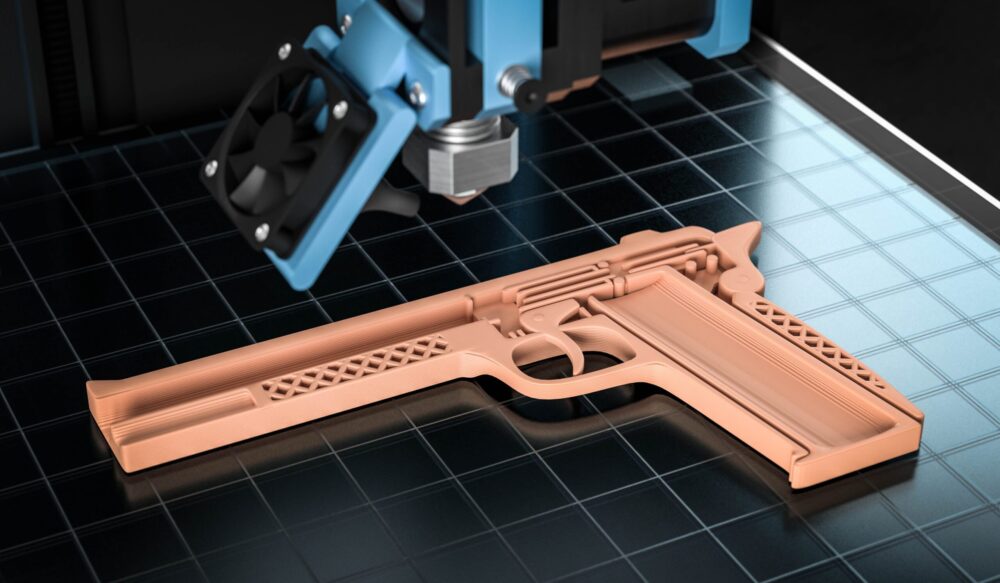
What are 3D Printed Firearms?
A 3D printed firearm is a gun, or part of a gun, made using a 3D printer. These printers use digital files to build objects layer by layer out of plastic or other materials. In the world of guns, this technology has opened up a lot of questions: who can make them, are they legal, and what happens when they are used for the wrong reasons.
In 2026, 3D printed firearms are making headlines in three big areas: military use, criminal cases, and legal battles. Below is a breakdown of each.
Section 1: Military Use – Faster and Cheaper Weapons
Militaries around the world are looking at 3D printing as a way to make weapons faster and at a lower cost. Instead of waiting weeks or months for traditional manufacturing, 3D printing can speed up how quickly new parts and weapons are made.
Current military programs are focused on two main areas.
Drones: Small, lightweight drones can be printed quickly and cheaply. This allows the military to produce more units in less time, providing an advantage in the field.
Jet engines and aircraft parts: 3D printing enables engineers to design and test components faster than traditional methods. This accelerates upgrades and development of aircraft and other equipment.
The goal is to adapt faster, reduce costs, and maintain an advantage. 3D printing provides flexibility to respond to changing battlefield needs.
Section 2: Criminal Misuse – The Ghost Gun Problem
While the military sees opportunity, law enforcement has growing concerns. High profile criminal cases have brought 3D printed firearms, often called ghost guns, into public focus.
These are called ghost guns because they typically lack serial numbers, making them difficult to trace and leaving no traditional purchase record.
One widely discussed case involved the murder of a United Healthcare CEO, which brought increased public attention to how untraceable firearms can be produced.
The general process involves downloading a digital file, using a 3D printer to produce certain components, and assembling them. There is no background check for accessing files, which has raised concerns about accessibility and misuse.
Section 3: Legal Battles – Who Is Responsible
The legal landscape around 3D printed firearms is complex and still evolving.
A central question is who is responsible when these weapons are used in crimes.
Responsibility may be debated among several parties:
- The individual who prints and assembles the firearm
- The website or provider hosting or distributing the digital files
- The manufacturer of the 3D printer
Some states have pursued legal action against companies that provide files or parts, arguing they contribute to the creation of untraceable weapons. These companies often respond that they are providing tools or information, not finished products, and should not be held liable for misuse.
There is also an ongoing debate around free speech. Courts have considered whether sharing digital design files is protected as information under the First Amendment.
A common misunderstanding is that 3D printing a firearm is as simple as pressing print. In reality, most builds require additional non printed components such as springs, barrels, or firing pins, which must be sourced separately. This means the process involves multiple steps, tools, and knowledge.
Section 4: What the Law Says as of 2026
Laws regarding 3D printed firearms vary widely depending on location.
At the federal level in the United States, it is generally legal in many areas to manufacture a firearm for personal use, but selling firearms without proper licensing is illegal. The status of unmarked or unserialized firearms continues to be challenged and clarified in courts.
At the state level, some states require serialization or registration of certain firearms, including those assembled from kits or printed components. Others have enacted stricter restrictions or bans.
Internationally, many countries have stricter regulations, and in some places, manufacturing or possessing a 3D printed firearm is prohibited entirely.
Because laws are changing, it is important to verify current regulations in your specific jurisdiction.
Why This Matters
3D printed firearms sit at the intersection of technology, safety, and law. They present a challenge in terms of regulation because they can be produced using widely available tools and shared digital files.
There are potential benefits, including faster manufacturing and innovation, alongside risks related to misuse and lack of traceability.
Understanding these factors is important for forming an informed perspective on the issue.
Quick Summary
Military use: 3D printing speeds up production of drones and aircraft components
Criminal misuse: ghost guns are difficult to trace and raise safety concerns
Legal battles: courts are still determining responsibility and regulation
Common myth: these firearms typically require additional parts and are not created in a single step
Important Note: This Is Not a Complete Guide
This document provides a general overview of 3D printed firearms and related issues as of 2026. It is not a comprehensive legal resource.
Laws and regulations vary significantly by location and are subject to change. What is permitted in one area may be restricted or prohibited in another.
For specific legal guidance, consult a licensed attorney or appropriate local authorities. Do not rely solely on this document when making decisions involving firearms.
This content is for informational purposes only. Always follow applicable federal, state, and local laws.