
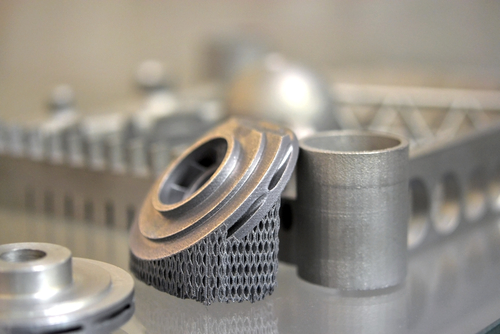
Metal 3D Printing Service
Metal 3D printing offers exceptional strength, precision, and design flexibility for industrial applications.
All Uploads are Confidential and Secure
Last Updated:
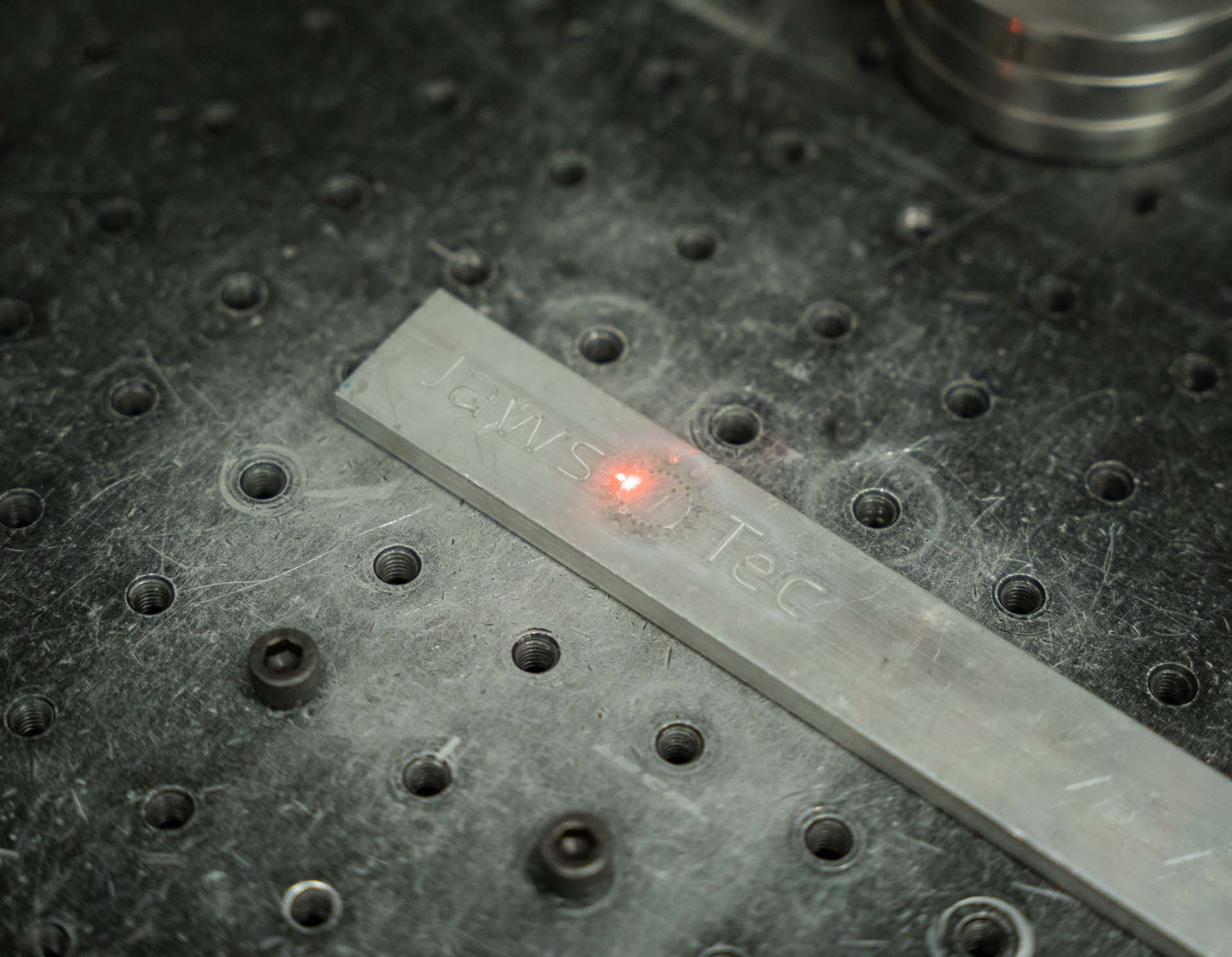
Why Choose Metal 3D Printing?
Metal 3D printing is used across many industries, including aerospace and defense, medical devices, automotive, oil and gas, robotics, and consumer products, to produce strong, lightweight, and highly complex components that are difficult or costly to manufacture with traditional methods. Common applications include aerospace brackets and engine components, automotive prototypes and performance parts, medical implants and surgical tools, industrial tooling and fixtures, and custom low-volume production parts. The ability to create intricate geometries, internal channels, and optimized designs makes metal additive manufacturing a valuable solution for both rapid prototyping and end-use manufacturing, whether the priority is complex geometry, weight reduction, faster prototyping, or supply chain flexibility.
How Metal 3D Printing Works
Metal 3D printing is an additive manufacturing process that creates parts layer by layer directly from a digital 3D model. By building components from metal powder rather than removing material through machining, metal 3D printing enables complex geometries, lightweight designs, and highly customized parts with reduced material waste and faster production timelines.
Selective Laser Melting (SLM)
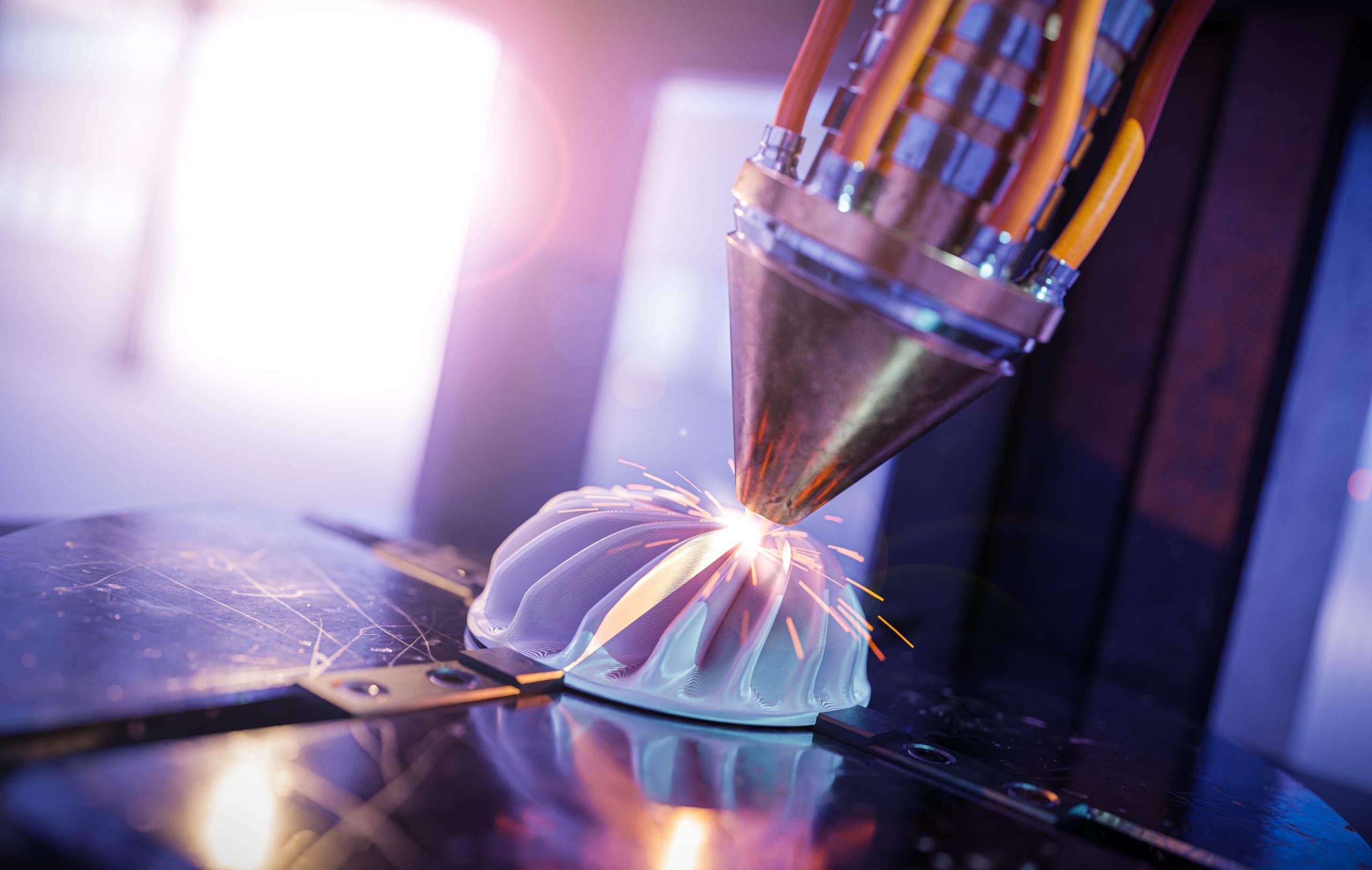
Selective Laser Melting (SLM) uses a high-powered laser to completely melt and fuse fine metal powder layer by layer. This process produces fully dense metal parts with exceptional strength, accuracy, and mechanical performance. SLM is commonly used for aerospace, automotive, medical, and industrial applications where high-performance, production-ready components are required.
Direct Metal Laser Sintering (DMLS)
Direct Metal Laser Sintering (DMLS) uses a laser to fuse metal powder into solid layers, creating complex and highly detailed metal components. DMLS is well-suited for producing intricate geometries, internal channels, and lightweight structures that are difficult to manufacture using traditional methods. The process is widely used for prototypes, tooling, and end-use parts across aerospace, medical, and engineering industries.
Benefits of Metal 3D Printing
Metal 3D printing, also known as metal additive manufacturing, offers advantages that traditional manufacturing methods can't match. From design through production, these benefits are transforming how engineers and manufacturers approach complex components.
Reduced Material Waste
Unlike subtractive processes like CNC machining, metal 3D printing builds parts layer by layer using only the material required. This reduces waste, lowers raw material costs, and is a more sustainable option, especially when working with expensive alloys like titanium or Inconel.
Complex Geometries and Lightweighting
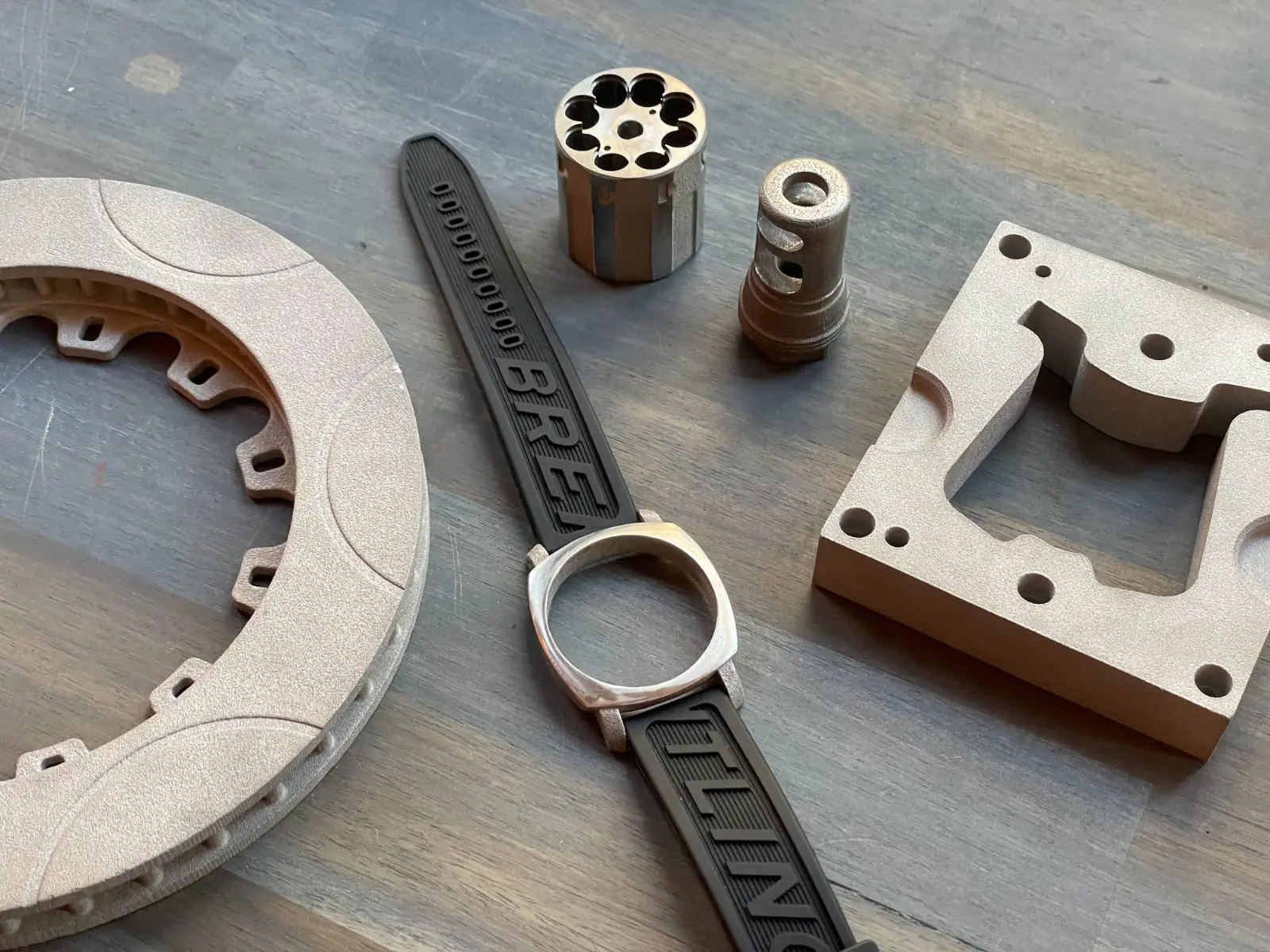
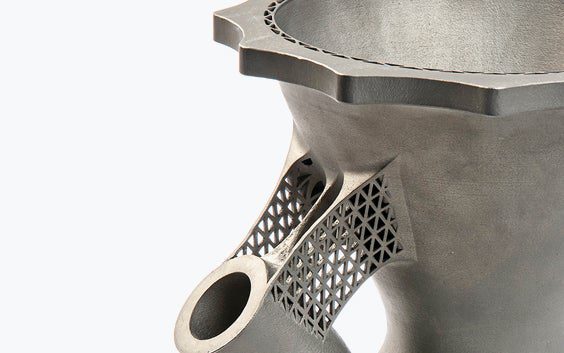
Metal 3D printing produces shapes impossible to manufacture any other way, lattice structures, internal cooling channels, and organic forms can all be printed in a single build. Combined with topology optimization, this allows engineers to remove material from non-critical areas, producing components that are significantly lighter without sacrificing strength. Both capabilities are especially valuable in aerospace, automotive, and medical device applications.
Faster Prototyping and No Tooling Costs
Traditional metal components require weeks of lead time for tooling and setup. Metal additive manufacturing eliminates upfront tooling costs entirely; parts go from CAD file to physical component in days. Design iterations are fast and inexpensive, with no molds, dies, or fixtures required at any stage.
Consolidated Assemblies
Parts that once required multiple components assembled together can often be redesigned and printed as a single piece. Fewer parts mean fewer failure points, reduced assembly time, and simpler supply chains, one of the most underappreciated advantages of metal additive manufacturing in industrial settings.
On-Demand Production
Metal 3D printing removes the need for large part inventories. Components are stored as digital files and printed when needed, reducing warehousing costs, eliminating obsolescence risk, and making low-volume and legacy production runs practical without traditional manufacturing overhead.
Industries Using Metal 3D Printing
Aerospace
- Lightweight brackets
- Housings
- Heat exchangers
- and mission-critical components with optimized strength-to-weight performance.
Automotive
- Custom brackets
- Manifolds
- Tooling
- and performance parts designed for rapid iteration and reduced weight.
Medical
- Surgical tools
- Guides
- Implants
- and patient-specific components that benefit from precision and biocompatible materials.
Robotics
- Lightweight structural components
- End effectors
- and custom assemblies that improve performance and integration.
Industrial
- Jigs
- Fixtures
- Replacement parts
- and production tooling that help reduce downtime and improve efficiency.
Metal 3D Printing vs Traditional Manufacturing
| Metal 3D Printing | Traditional Manufacturing | |
|---|---|---|
| Tooling Required | None | Molds, dies, or fixtures required |
| Design Flexibility | Complex geometries, internal features | Limited by tooling constraints |
| Material Waste | Minimal — additive process | High — subtractive or excess material |
| Lead Time | Days | Weeks to months |
| Unit Cost at Low Volume | Cost-effective | High due to tooling amortization |
| Unit Cost at High Volume | Higher per part | Lower per part |
| Design Changes | Edit the file, reprint | Retooling required |
| Best For | Prototypes, complex parts, low-to-mid volume | High-volume, simpler geometries |
Metal 3D Printing vs CNC Machining
| Metal 3D Printing | CNC Machining | |
|---|---|---|
| Process Type | Additive | Subtractive |
| Geometry Capability | Complex, internal channels, lattices | Limited to tool-accessible surfaces |
| Material Waste | Low | High — material cut away |
| Surface Finish | Requires post-processing | Excellent as-machined |
| Tolerances | Moderate | Very tight |
| Prototyping Speed | Fast | Moderate |
| High-Volume Production | Less cost-effective | Strong option |
| Best For | Complex or lightweight parts, fast iterations | Tight-tolerance, simpler geometry parts |
Metal 3D Printing vs Casting
| Metal 3D Printing | Casting | |
|---|---|---|
| Tooling Required | None | Patterns and molds required |
| Upfront Cost | Low | High |
| Lead Time | Days | Weeks to months |
| Geometry Complexity | Very high | Moderate — limited by mold design |
| Internal Features | Possible | Difficult without cores |
| Material Options | Wide range of alloys | Wide range of alloys |
| Surface Finish | Requires post-processing | Good, varies by method |
| Minimum Order Quantity | One | Often high |
| Best For | Low volume, complex geometry, fast turnaround | High-volume, established production runs |
Real World Use
Case Study: Illini Autonomous Vehicles
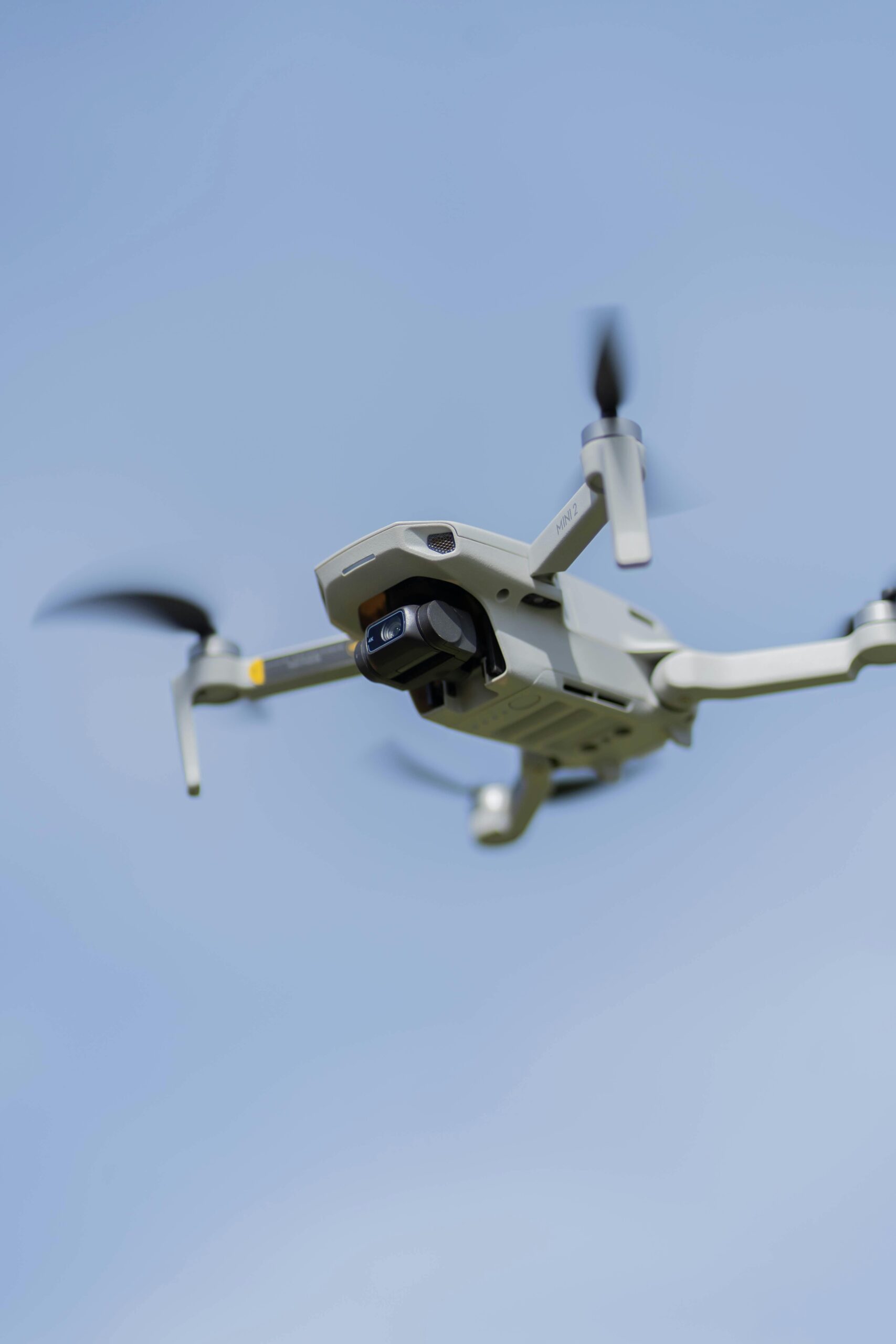
Read about, Illini Autonomous Vehicles, a company who uses our 3D printing service for custom manufactured drone components.
What Our Customers Say




FAQ's
-
Do you print in color?We now offer multiple colors for our MJF and SLS processes. In order to get a quote, you will need a .3MF file. Watch Video Here.
-
What type of CAD files does your quote engine support?Our 3D quote engine will accept the following CAD files, .STL, .3mf, .OBJ, .STP, or .STEP files. Watch Video Here.
-
What type of files can I 3D print off of?We can print from almost any 3D cad file type, .STL files would be our preferred method. Watch Video Here.
-
How do I request orientation on my parts?We now offer a section on our quote page. After uploading your CAD file, select the box for a specific orientation and upload your PDF or image showing your exact orientation. Watch Video Here.
-
Does Tumbling, Polishing, or Vapor Polishing affect the dimension on my finished part?It could affect your finished part dimension by .05mm. Watch Video Here.
-
Does JawsTec offer 3D metal printing?JawsTec Offers 3 materials for Metal 3D printing
- Aluminum
- 316L Stainless Steel
- 17-4 PH Stainless Steel
-
How big can my part be to be printed in a single section?The HP MJF machines have a max print area of 380mm x 280mm x 380mm. The EOS machines have a max print area of 340mm x700mm x 580mm. Watch Video Here.