
Why Heat-Set Insert Specifications Need Scrutiny
Heat-set inserts create reliable threaded connections in 3D printed parts. Engineers depend on manufacturer datasheets for design decisions. But recent testing reveals those specifications may not tell the whole story.
Engineering YouTuber CNC Kitchen conducted rigorous testing on heat-set inserts. The results challenge assumptions many engineers make when designing plastic assemblies. Understanding these findings helps procurement teams and designers specify better parts.
The Gap Between Datasheets and Reality
Manufacturer datasheets provide pull-out and torque resistance values. These numbers come from specific test conditions. Your application likely differs from those conditions significantly.
Key variables affecting insert performance include:
- Base material type and print orientation
- Installation temperature and technique
- Hole diameter tolerances
- Wall thickness around the insert
- Post-installation cooling time
Testing showed that installation parameters dramatically impact final strength. The same insert can perform vastly differently based on how it’s installed.
Critical Installation Variables
Temperature Matters More Than Expected
Soldering iron temperature affects how plastic flows around insert knurling. Too hot melts excessive material, creating voids. Too cold prevents proper bonding between insert and surrounding plastic.
Different thermoplastics require different temperature ranges. Material selection directly impacts your installation process parameters.
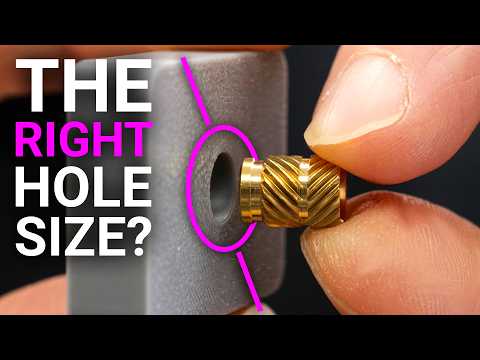
Hole Sizing Requires Precision
Undersized holes create installation difficulties and potential cracking. Oversized holes reduce pull-out resistance significantly. The optimal hole diameter depends on your specific insert and material combination.
Consider these hole design factors:
- Account for material shrinkage after printing
- Test hole tolerances with your specific process
- Document optimal parameters for production consistency
Print Orientation Affects Insert Strength
Layer orientation relative to insert direction changes performance dramatically. Inserts perpendicular to layers often outperform parallel installations. Understanding why orientation matters helps engineers design stronger assemblies.
Industrial processes like Multi Jet Fusion and Selective Laser Sintering produce more isotropic parts. This reduces orientation sensitivity compared to FDM processes.
Practical Recommendations for Engineers
Validate Before Production
Never rely solely on datasheet values for critical applications. Create test specimens matching your production geometry and process. Destructive testing reveals actual performance in your specific use case.
Standardize Installation Procedures
Consistency matters as much as optimal parameters. Document temperature settings, insertion speed, and cooling requirements. Train production staff on proper technique to minimize variation.
Design Conservative Wall Thickness
Thin walls around inserts reduce pull-out strength substantially. Provide adequate material for load distribution. Consider adding reinforcing geometry for high-stress applications.
When to Consider Alternative Solutions
Heat-set inserts work well for many applications. However, some situations warrant different approaches. High-volume production may justify molded-in inserts or direct metal printing.
For production quantities, comparing 3D printing to injection molding helps determine the best manufacturing approach. JawsTec engineers can help evaluate options for your specific requirements.
Moving Forward with Better Data
Independent testing provides valuable real-world performance data. Engineers should supplement manufacturer specifications with application-specific validation. This approach reduces field failures and improves product reliability.
Ready to produce parts requiring threaded inserts? Request a quote from JawsTec for professional guidance on material selection and design optimization.
Sources
Source: Are Our Heat-Set Insert Datasheets Wrong? by CNC Kitchen (YouTube) — https://www.youtube.com/watch?v=B5g7R53hcH4