
Last Updated:
Manufacturing used to be slow, expensive, and hard to access. If you wanted to make a custom part, you often needed a factory, a big budget, and weeks of waiting. Today, that has changed. 3D printing has opened the door for anyone with an idea to turn it into a real, physical object. One of the biggest reasons for this shift is a technology called Multi Jet Fusion, or MJF 3D printing.
What Is MJF 3D Printing?
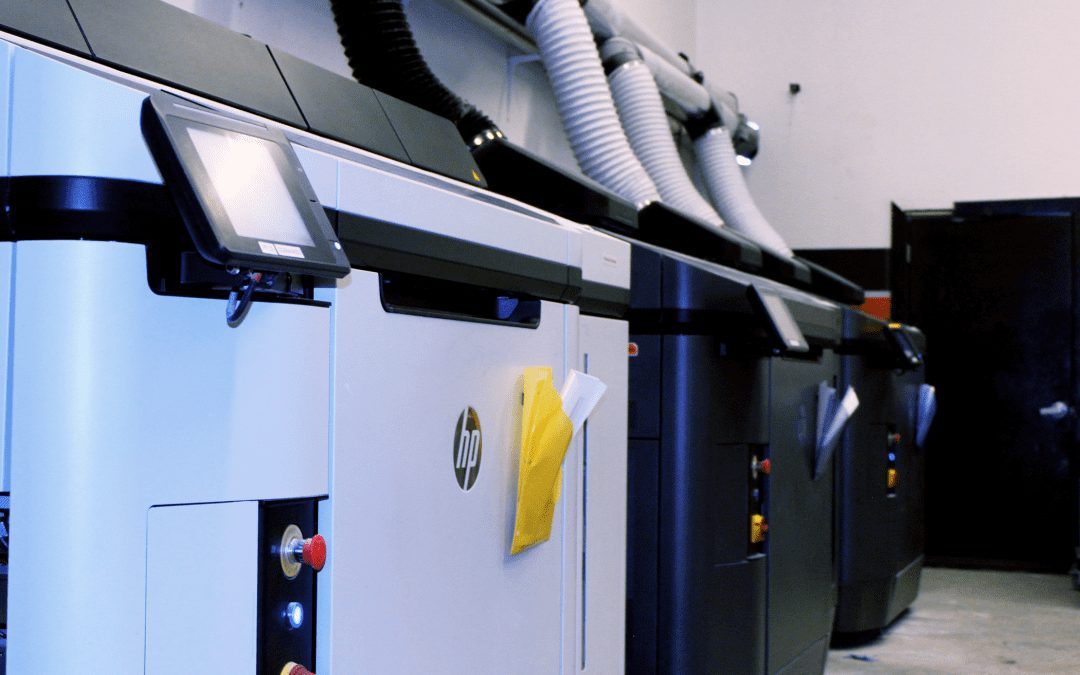
MJF stands for Multi Jet Fusion. It is a type of 3D printing developed by HP that builds parts layer by layer using a bed of nylon powder. Instead of a laser tracing out each layer like older methods, MJF uses inkjet arrays to apply fusing agents across the whole surface at once. This makes the process faster and more consistent, and it produces strong, detailed parts that are ready for real-world use.
Because MJF works with durable materials like nylon, it is a popular choice for everything from rapid prototyping to full production runs. Engineers like it because the parts hold up well under stress, and businesses like it because it keeps costs down when producing many parts at once.
More Creativity, Fewer Limits
Traditional manufacturing methods, like injection molding or machining, often force designers to simplify their ideas. Complex shapes can be expensive or even impossible to make with old tools. 3D printing removes many of those limits.
With MJF, designers can create parts with hollow sections, curved internal channels, and interlocking pieces that would be very hard to build any other way. This freedom lets engineers focus on what works best for the product, not just what a machine can handle. It also means new products can look and function in ways that were not possible before.
This kind of creative freedom matters across many fields. Companies making aerospace and aviation parts use it to build lightweight components that still meet strict safety standards. Automotive teams use it to test new designs quickly. Even medical device makers use MJF to create custom parts that fit a patient’s exact needs.
Easier Access for Everyone
Not long ago, manufacturing was mostly limited to large companies with big budgets. Small businesses, startups, and independent inventors often could not afford the tooling and setup costs required for traditional production. 3D printing has changed that story.
With MJF, there is no need for expensive molds or long setup times. A designer can upload a digital file and get a finished part back in just a few days. This makes it possible for a small business to test an idea, adjust it, and improve it without spending a fortune. It also means students, hobbyists, and startups can compete with much bigger players, at least when it comes to getting a product off the ground.
Services that offer instant online quotes have made this even easier. Instead of calling around for pricing or waiting on a sales team, anyone can upload a file, choose a material, and see a price right away. This kind of easy access has helped 3D printing spread far beyond factories and into schools, garages, and small workshops everywhere.
From Prototype to Production
One of the most useful things about MJF is that it works well at every stage of product development. A team can use it to build a quick prototype, test how it fits and functions, then use the same process to produce a small batch or even a full production run. This removes the need to switch between different manufacturing methods as a product moves from idea to finished good.
Because of this flexibility, MJF has become popular in industries with very different needs, from consumer products to industrial machinery. Whether someone is building a single custom part or thousands of identical ones, the process stays fast and reliable.
Looking Ahead
3D printing, and MJF in particular, has changed manufacturing by making it faster, more flexible, and more open to new ideas. Designers are no longer boxed in by the limits of older machines, and small businesses no longer need massive budgets to bring a product to life. As the technology keeps improving, it is likely to open even more doors for creative thinkers who just need a way to turn their ideas into something real.
If you want to see how this process could work for your own project, you can learn more in the Multi Jet Fusion design guide or explore more articles on the JawsTec blog.
MJF really does change the production calculus versus FDM — powder-bed fusion, no support structures, and parts that hold up for real runs instead of just prototypes. For one-off printable concepts before you commit to an MJF batch, I have also been starting from a text prompt and grabbing a free STL at luphra.com to sanity-check the geometry on a desktop printer first.