
What Toolchanger Technology Means for Industrial AM
Toolchanger 3D printers are gaining attention in the desktop space. These systems swap print heads automatically during a build. This enables true multi-material printing without manual intervention.
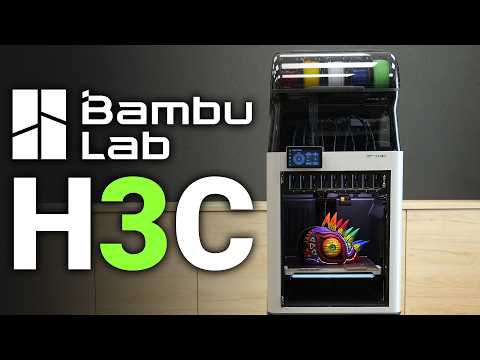
A recent video from YouTube creator CNC Kitchen explored Bambu Lab’s H3C toolchanger system. While this targets the consumer market, the underlying concept matters for industrial teams. Understanding toolchanger limitations helps engineers choose the right process.
How Toolchangers Work
Toolchanger systems use multiple independent print heads. Each head carries a different material or color. The machine swaps heads at programmed points during the build.
This differs from single-head multi-material systems. Those rely on purge towers and filament swaps. Toolchangers reduce waste and improve material separation.
Key Benefits of Toolchanger Design
- Cleaner material transitions without cross-contamination
- Ability to print soluble supports with a dedicated head
- Reduced purge waste compared to single-head systems
- Independent temperature control for each material
Industrial Alternatives for Multi-Material Parts
Desktop toolchangers serve prototyping well. But production teams need proven industrial processes. Several technologies handle multi-material requirements at scale.
Multi Jet Fusion (MJF) produces functional nylon parts with consistent properties. While not multi-material in one build, MJF enables rapid iteration. Teams can test designs quickly before committing to tooling.
When to Consider Industrial Powder Bed Processes
Selective laser sintering (SLS) offers similar advantages. Both MJF and SLS build parts without support structures. This freedom enables complex geometries that toolchangers cannot match.
- Interlocking assemblies printed as single units
- Internal channels and lattice structures
- Consistent mechanical properties throughout the part
- Production-ready surface finish
Design Considerations for Manufacturing Teams
Multi-material printing adds complexity. Each interface between materials creates a potential failure point. Engineers must design for the specific process capabilities.
Material bonding strength varies dramatically between combinations. Testing is essential before production commitment. Choosing the right material often matters more than multi-material capability.
Process Selection for Production
Toolchangers suit prototyping and low-volume custom work. For production volumes, injection molding or industrial AM often prove more cost-effective. The key is matching process to application requirements.
JawsTec helps engineering teams navigate these decisions. Our industrial processes deliver consistent results at production volumes. Request a quote to compare options for your specific application.
The Bigger Picture for Procurement Teams
Desktop toolchangers democratize multi-material prototyping. This speeds early design validation. But production decisions require different criteria.
Consider total cost of ownership, not just per-part pricing. Factor in quality consistency, lead times, and certification requirements. Industrial AM services like JawsTec bridge the gap between prototype and production.
Multi-material capability is just one factor in process selection. Focus on your actual functional requirements first.
Sources
Source: Bambu Lab Finally Built the Toolchanger We Wanted! by CNC Kitchen (YouTube) — https://www.youtube.com/watch?v=V3X8Xe5W04g