
With the rise of 3D printing technology, it’s becoming increasingly common to see these machines in homes, schools, and maker spaces. This revolutionary technology allows anyone to design and produce a wide variety of objects, but not everything is legal to print. Certain items remain prohibited due to safety risks, legal restrictions, and intellectual property rights. Understanding what things cannot be 3d printed is just as important as knowing what you can create. Here’s a breakdown of what you should avoid printing and why.
To better understand what things cannot be 3d printed, it helps to break them down into specific categories.
Copyrighted Designs and 3D Models
While it may seem harmless to print an object you find online, most 3D models and CAD files are protected by copyright. The creator of a file owns the rights to their design, including the right to produce, sell, and distribute it. Printing such designs without permission is considered copyright infringement. Even for personal use, printing copyrighted designs can carry legal consequences, including fines or, in extreme cases, criminal charges. While enforcement may vary, it’s best to always respect intellectual property by using files from reputable sources with clear licensing, creating your own designs, or purchasing licensed models. Common items that come up for 3D Printing is Lego’s. Legos are a copyrighted design and can carry legal consequences for printing and distributing.
A common example people ask about is: “Is it illegal to 3D print Legos?” For instance, someone might download a model of a standard Lego-style brick and print it at home to test their printer or build a small project. While printing a brick for personal experimentation may seem harmless, the situation changes if someone begins selling or distributing those printed bricks, especially if they copy the original Lego design or branding. In that case, it can raise intellectual property and trademark concerns because the brick design and brand are closely associated with the company.
Patents, Trademarks, and File Licenses
Copyright isn’t the only intellectual property issue in 3D printing.
- Patents. Functional designs can be protected by utility or design patents, which can restrict making or selling copies even if the file is freely available.
- Trademarks. Logos, brand names, and some distinctive product shapes can be protected. Printing branded items for sale can lead to takedown demands or legal action.
- File licenses. Many models come with licenses. Creative Commons “non-commercial” licenses, for example, allow personal printing but not selling the results. Always read the license before printing for anyone else.
Printing for personal experimentation is generally lower risk than selling or distributing copies, but the safest approach is to use original designs or properly licensed files.
Firearms and Weapon Components
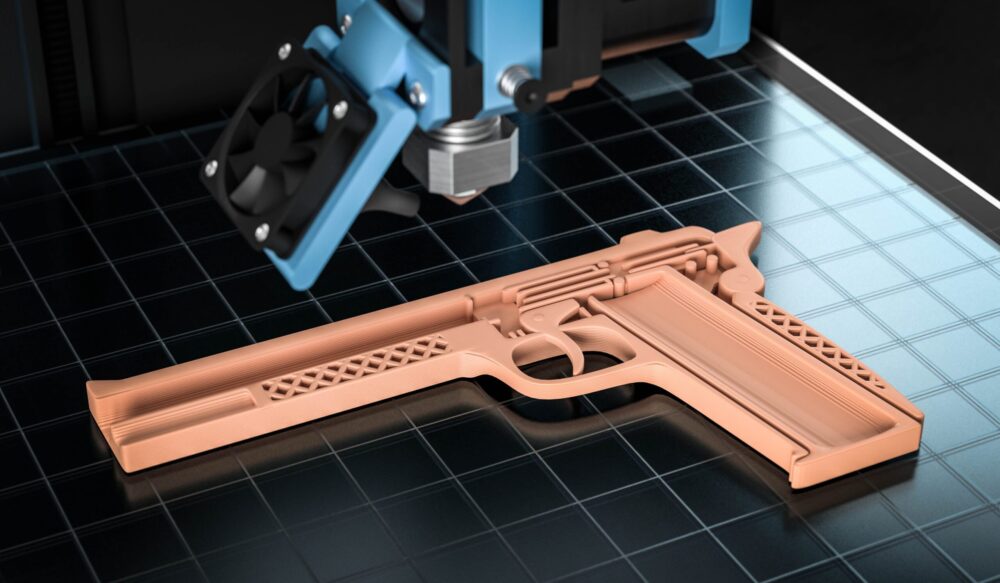
Are 3D Printed guns legal? 3D-printed firearms remain a contentious legal topic. In some regions, printing a firearm is legal under strict restrictions, while in others it’s entirely prohibited. Key considerations include material requirements — many laws require firearms to contain a certain amount of metal, licensing and registration requirements, and local laws that differ from place to place. Due to the complexity of these laws and the potential penalties, it’s essential to research your area’s regulations thoroughly before attempting to print any weapon components.
*Important Update*
California is moving to ban the sale of 3D Printers that do not include firearm blocking technology. This is in an effort to ban the production of so called “ghost guns”. This is not a ban on 3D Printers or regular 3D Printing. Find more relevant information by looking into Assembly Bill 2047.
Recent Legal Developments
Rules on 3D-printed firearms are changing quickly at both the federal and state level.
- Federal ghost gun rule. In Bondi v. VanDerStok (March 2025), the Supreme Court upheld an ATF rule covering unmarked firearms and the kits used to complete them. The ruling addressed only whether the agency exceeded its statutory authority. The rule has since faced further challenges in lower courts, so its status is still developing.
- State laws. According to Everytown for Gun Safety, eleven states generally prohibit 3D-printed guns and six more require serial numbers. Rules differ widely by location.
- Printer-blocking proposals. Beyond California’s AB 2047, New York has proposed requiring printer manufacturers to block firearm production and criminalizing unlicensed possession of gun blueprints. Any mandate wouldn’t begin until 2029 or later, and critics question whether the technology can work reliably.
Counterfeit and Fraudulent Items
Producing counterfeit items with a 3D printer is illegal in nearly all jurisdictions. This includes fake currency or coins, replicas of official government documents such as passports or driver’s licenses, and knock-off branded products. These offenses violate anti-counterfeiting laws and can result in severe penalties, including imprisonment.
Medical Devices and Equipment
Medical devices such as prosthetics, implants, or surgical tools require certification from health and safety authorities. Printing such devices without proper licensing is illegal because they must meet strict safety standards, can directly impact human health, and improperly manufactured medical devices may cause harm. Only licensed manufacturers and healthcare providers should produce certified medical equipment.
A note on personal use vs. sale
Whether printing a medical item is regulated depends on what the item is and how it’s used. Higher-risk devices like implants and surgical instruments face strict oversight, especially when sold or used on patients. Lower-risk items, like some custom orthotics or accessories, are treated differently. Regulators such as the FDA look at risk level, intended use, and who is making and distributing the device, so check the current rules before producing anything for medical use.
Drug Manufacturing Tools and Paraphernalia
Another category that can raise legal concerns is the 3D printing of tools used to manufacture or distribute illegal drugs. While 3D printing itself is legal, producing certain devices designed specifically for drug production may violate local, state, or federal laws depending on how they are used.
For example, some people have experimented with 3D printing pill molds, tablet presses, capsule fillers, or molds used to shape substances into tablets or candies. These tools could be used to create counterfeit medications or produce controlled substances in pill form. Manufacturing or distributing devices intended for producing illegal drugs can be considered possession of drug manufacturing equipment in many jurisdictions.
There are also concerns around printing tools designed to package or conceal drugs, such as hidden containers or specialized molds. While some items may have legitimate uses, creating or distributing them with the intent to support illegal drug activity could expose individuals to legal consequences.
Because drug manufacturing and distribution are heavily regulated, producing tools specifically designed for these purposes can fall under existing drug enforcement laws. As with many areas of 3D printing, the legality often depends on intent, usage, and distribution, not just the act of printing the object itself.
Tools for Illegal Activities
Certain tools that facilitate unlawful actions are prohibited to print. These include lockpicks and burglary tools, devices designed for hacking or unauthorized entry, and tools intended for sabotage or vandalism. Even possessing such tools can be illegal in some jurisdictions, especially if there is intent to use them unlawfully.
Context matters. Printing or owning items like lockpicks isn’t automatically illegal everywhere. Many places allow ownership for hobbies such as locksport, but laws often hinge on intent, such as possessing tools with the intent to commit a crime, and some states add restrictions of their own. Check local law before printing or carrying any such items.
Final Thoughts
3D printing offers incredible creative freedom, but it also comes with responsibility. Knowing what things cannot be 3d printed ensures you stay compliant with laws and ethical standards. Legal restrictions are in place to protect safety, intellectual property, and public trust. Always research local laws before producing any object, especially if it falls into one of these restricted categories. By respecting these boundaries, you can enjoy the benefits of 3D printing while staying on the right side of the law.
Last Updated:
Disclaimer: The information provided here is for general educational purposes only and should not be considered legal advice. Laws and regulations can vary by location and situation. If you have questions about intellectual property or 3D printing legality, you should consult a qualified legal professional.
Is it legal to print toy guns <1 joule?
If you live in a place that legally allows toy guns, yes, I would say.
Yes, 3D Printing a toy gun is legal, but there are regulations you still must comply with. All toy guns must have an orange or brightly colored tip on the end of a barrel to distinguish it from real firearms.
Show a photo to the local police because 3D printing almost anything even like a toy gun is not legal in Canada. They don’t care the color either because real guns can be painted. They are even stricter if you are selling or giving away the gun. And even owning a sliced file on your laptop of some guns is again the law here.