
Why Hull Lines Challenge Traditional Manufacturing
Marine components demand exceptional precision. Hull lines must flow smoothly to minimize drag and maximize performance. Traditional manufacturing often struggles with these complex curves.
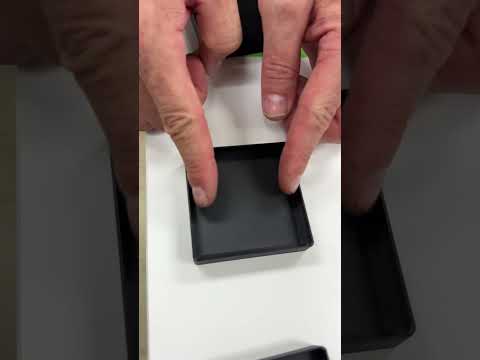
3D printed hull lines offer a compelling solution. Additive manufacturing excels at producing organic shapes that would require expensive tooling with conventional methods. Print farm operator Slant 3D recently demonstrated this capability.
Their work shows how modern printing achieves the accuracy boat builders need. The results challenge assumptions about additive manufacturing in marine applications.
Precision Requirements for Marine Components
Hull surfaces must meet strict tolerances. Even small deviations affect water flow and vessel performance. Engineers typically specify tight dimensional accuracy for these parts.
Key Precision Factors
- Layer height impacts surface smoothness on curved sections
- Material shrinkage must be compensated in design files
- Print orientation affects dimensional accuracy along different axes
- Post-processing requirements vary by application demands
Understanding why orientation matters in 3d printing becomes critical for marine parts. Proper orientation ensures strength aligns with stress loads.
Material Selection for Marine Applications
Not every 3D printing material suits marine environments. Parts face UV exposure, saltwater contact, and mechanical stress. Material choice directly impacts component longevity.
Common Material Options
- Nylon PA12 offers excellent chemical resistance and durability
- TPU provides flexibility for gaskets and seals
- Carbon-filled composites add stiffness with reduced weight
- UV-stable resins work for exterior cosmetic components
JawsTec helps manufacturers select appropriate materials through their engineering consultation. Choosing the best 3d printing material requires understanding your specific operating conditions.
Design Considerations for Curved Geometries
Hull lines present unique design challenges. Smooth transitions between surfaces require careful CAD work. File quality directly impacts final part quality.
Mesh resolution matters significantly. Low-polygon models produce visible faceting on curved surfaces. Engineers should export STL files with sufficient triangle density.
Wall thickness consistency prevents weak spots. Variable thickness can cause warping during printing. Uniform walls typically produce more reliable results.
Surface Finish Optimization
Marine applications often require smooth surfaces. Post-processing can achieve near-injection-molded finishes. Learn more about making your 3D printed parts look better for cosmetic requirements.
Production Scale Considerations
Hull components range from prototypes to production runs. Different production volumes suit different manufacturing approaches. Additive manufacturing offers flexibility across quantities.
For low volumes, 3D printing eliminates tooling investment. This makes small batches economically viable. Custom boat builders particularly benefit from this flexibility.
Higher volumes may justify hybrid approaches. Comparing industrial 3D printing to injection molding helps determine the crossover point for your specific parts.
Process Selection for Marine Parts
Multi Jet Fusion excels at producing strong, detailed marine components. The process creates fully dense parts with excellent surface quality. MJF works particularly well for medium-batch production.
Selective Laser Sintering offers similar capabilities with broader material options. SLS produces durable parts without support structures. This benefits complex hull geometries significantly.
Getting Started With Marine 3D Printing
Moving marine components to additive manufacturing requires planning. Start with non-critical parts to validate your designs. Test material performance in actual operating conditions.
Ready to explore 3D printed hull lines for your application? Request a quote from JawsTec to discuss your marine component requirements with experienced engineers.
Sources
Source: Precision Printed Hull Lines by Slant 3D (YouTube) — https://www.youtube.com/watch?v=7HCY1GX6iTc