
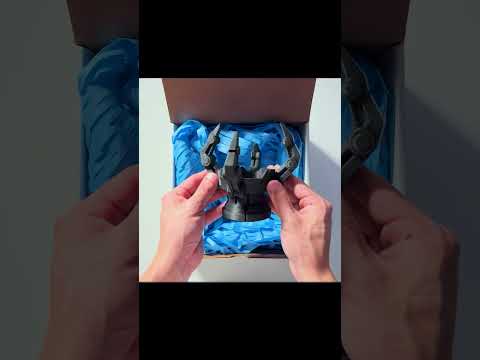
The Direct Path From Design to Delivery
3D printed product manufacturing has evolved beyond prototyping. Today, a single CAD file can become a sellable product without tooling investments. This shift changes how engineers and procurement teams approach production decisions.
Industrial 3D printing manufacturer Slant 3D demonstrates this in their video “One File Real Product.” They show how digital files transform directly into finished goods ready for customers.
Why Traditional Manufacturing Creates Barriers
Conventional production requires significant upfront investment. Injection molding demands expensive tooling. CNC machining needs programming and fixturing. These costs force high minimum order quantities.
Many viable products never reach market because of these barriers. Small production runs become economically impossible. Design changes after tooling add massive costs.
The Digital Manufacturing Alternative
Additive manufacturing eliminates tooling entirely. Your CAD file becomes the production instruction set. Changes happen in software, not physical molds.
This approach offers distinct advantages:
- Zero tooling investment required
- Economical at quantities from 1 to 10,000+
- Design iterations without retooling costs
- Faster time-to-market for new products
- On-demand production reduces inventory risk
Practical Steps for Production-Ready 3D Printing
Moving from prototype to production requires planning. Not every part suits additive manufacturing. Understanding when 3D printing makes sense is crucial.
Evaluate Your Part Geometry
Complex geometries often favor 3D printing. Parts with internal channels, lattice structures, or organic shapes print easily. These same features increase CNC machining costs dramatically.
Consider part orientation during design. Build direction affects surface finish, strength, and cost. Designing with print orientation in mind improves outcomes.
Select the Right Process
Different additive technologies serve different needs. Multi Jet Fusion (MJF) excels at functional nylon parts. Selective Laser Sintering (SLS) handles complex geometries without supports.
Key process selection factors include:
- Material requirements (strength, flexibility, heat resistance)
- Surface finish expectations
- Production volume targets
- Cost per part at scale
Optimize for Manufacturing
Design-for-additive-manufacturing (DfAM) principles maximize value. Wall thicknesses need consideration. Feature sizes must match process capabilities.
JawsTec helps engineers optimize designs for production. Their team reviews files and suggests improvements before manufacturing. This prevents costly mistakes.
When 3D Printed Production Makes Sense
Not every product suits additive manufacturing. Understanding the sweet spot helps procurement teams make smart decisions.
3D printing wins for low-to-mid volume production. Parts under 10,000 units often cost less than injection molding. Complex assemblies can consolidate into single printed parts.
Compare your options carefully. Industrial 3D printing versus injection molding involves tradeoffs. Volume, geometry, and timeline all factor into the decision.
Getting Started With Production 3D Printing
The path from file to product is simpler than many expect. Upload your CAD file. Select materials and finish options. Receive production-quality parts.
JawsTec offers instant quoting for production runs. Get a quote to see how your part costs scale with volume. Their engineering team can advise on process selection.
The gap between design and product continues shrinking. For engineers and manufacturers, this means faster innovation cycles and reduced risk.
Sources
Source: One File Real Product by Slant 3D (YouTube) — https://www.youtube.com/watch?v=xHKM6Tb_rpA