
Last Updated:
Can a 3D printer print metal? Yes, but not the kind of printer sitting in a school lab or a home office.
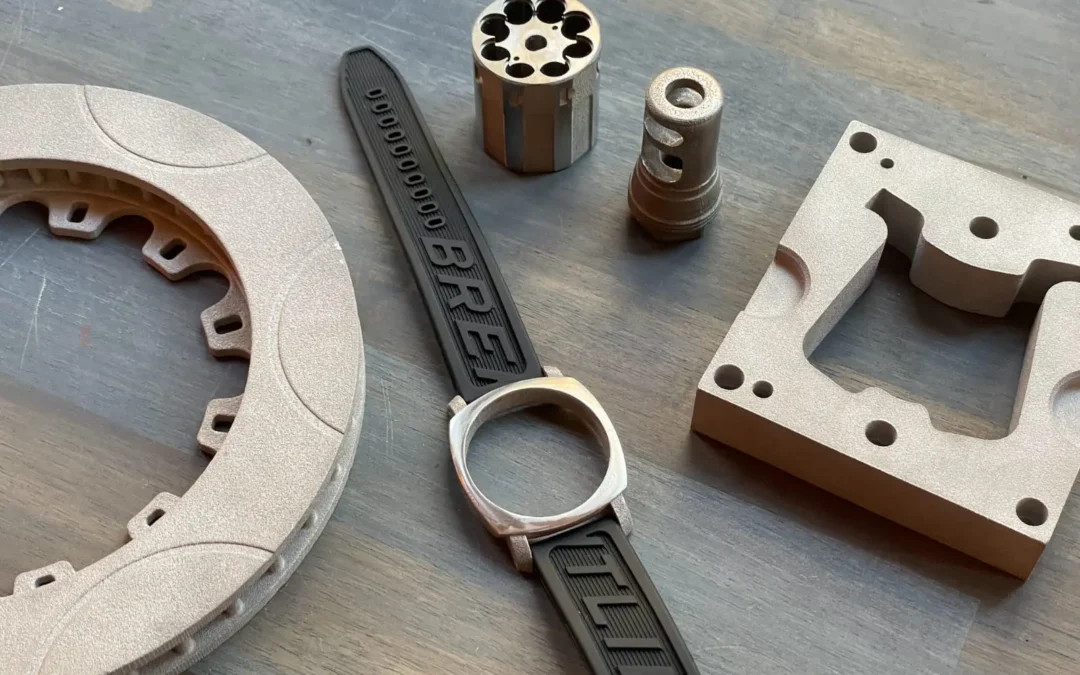
Metal 3D printing requires industrial-grade equipment, controlled environments, and trained technicians. It’s a fundamentally different process from plastic 3D printing, and the results are equally different: fully dense, functional metal parts with mechanical properties comparable to traditionally manufactured components.
At JawsTec, we operate Selective Laser Melting systems in-house and produce metal parts in aluminum, 316L stainless steel, and 17-4PH stainless steel. Here’s exactly how it works.
Why Desktop Printers can’t print Metal
Most consumer and prosumer 3D printers work by melting plastic filament and depositing it layer by layer. That process works well for polymers, but metal requires vastly more energy to melt, a controlled atmosphere to prevent oxidation, and post-processing steps like heat treatment and support removal that require specialized equipment.
The machines capable of true metal printing are large, expensive industrial systems. They’re found at professional service bureaus and advanced manufacturing facilities, not in homes or school makerspaces.
How Metal 3D Printing Works
The most capable metal 3D printing process available today is Selective Laser Melting, or SLM.
Here’s the process step by step:
- A thin layer of fine metal powder is spread across a build plate
- A high-powered laser scans the layer, fully melting the powder into solid metal based on your digital design file
- The build plate lowers, a new layer of powder is spread, and the process repeats
- Once the build is complete, the part undergoes heat treatment and support removal
Because the powder is fully melted rather than just sintered or bonded, the finished part is fully dense solid metal, not a porous or brittle approximation. Mechanical properties are comparable to wrought or cast equivalents.
How SLM Differs from CNC Machining
CNC machining is subtractive. It starts with a solid block of metal and removes material until the part shape remains. It’s precise and proven, but it generates significant material waste and struggles with internal features like channels, lattice structures, or complex undercuts.
SLM is additive. It builds the part using only the material the design requires. That distinction matters for several reasons:
- Complex internal geometries that CNC cannot reach are printable
- Lightweight lattice structures reduce part weight without sacrificing strength
- No tooling or molds are required, so design changes don’t carry retooling costs
- Low-volume production runs are economical in a way they aren’t with traditional methods
For prototypes, custom components, and complex functional parts, SLM often outperforms CNC on both cost and capability.
Metal 3D Printing Materials at JawsTec
We offer three metal materials, each suited to different applications:
| Material | Key Properties | Common Uses |
|---|---|---|
| Aluminum AlSi10Mg | Lightweight, strong strength-to-weight ratio | Aerospace brackets, automotive components, performance parts |
| Stainless Steel 316L | Excellent corrosion resistance, tough | Industrial tooling, marine components, medical devices |
| Stainless Steel 17-4PH | High strength, heat treatable | Load-bearing mechanical parts, functional hardware |
Not sure which material is right for your application? Our team can help you choose based on your strength, weight, and environmental requirements.
Contact us with your project details
Where Metal 3D Printing make the most sense
Metal 3D printing isn’t always the right answer. For high-volume identical parts, CNC machining or casting is often more cost-effective. But for these use cases, SLM is hard to beat:
- Functional prototypes that need real metal properties
- Low to mid volume production runs without tooling costs
- Parts with internal channels, lattice structures, or complex geometry
- Custom brackets, housings, and fixtures
- Aerospace, automotive, and medical components with tight performance requirements
What does metal 3D Printing cost?
Metal 3D printing is more expensive than plastic printing. The machines are costly, metal powders are specialized, and post-processing adds time and labor. That said, when you factor in the elimination of tooling costs and the ability to produce complex geometry in a single build, it is often more economical than traditional methods for low-volume or complex work.
The fastest way to get a real number for your part is to upload your file and get an instant quote. Our AI-powered quote engine analyzes your geometry, material selection, and finish requirements and returns accurate pricing in seconds.
Final Thoughts
Metal 3D printing is real, capable, and increasingly accessible through industrial service bureaus like JawsTec. If your project requires strong, precise, and geometrically complex metal parts without the cost and lead time of traditional tooling, SLM is worth a serious look.
Upload your file today and see what it costs.