
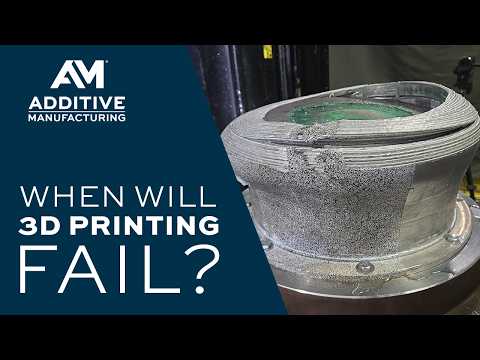
Extreme Pressure Testing Validates Metal AM Parts
A 3D printed pressure vessel designed for underwater vehicles recently passed destructive testing. The part withstood pressures far beyond operational requirements. This milestone proves additive manufacturing meets demanding subsea specifications.
AM Media’s The Cool Parts Show documented this breakthrough in hybrid directed energy deposition (DED). The pressure tank was built for unmanned underwater vehicles (UUVs). Engineers pushed it to failure to validate the design and process.
Why Hybrid DED Works for Pressure Vessels
Directed energy deposition combines additive and subtractive manufacturing. A laser melts metal powder onto a substrate. CNC machining then finishes critical surfaces in the same setup.
This hybrid approach offers key advantages for pressure vessels:
- Near-net-shape builds reduce material waste
- Integrated machining ensures precise sealing surfaces
- Complex internal geometries become possible
- Lead times drop compared to traditional fabrication
Traditional pressure vessels require extensive welding and machining. Hybrid DED consolidates these steps into a streamlined workflow.
Meeting Subsea Requirements
Underwater vehicles face crushing external pressures at depth. Every component must perform flawlessly. The tested vessel was designed for these extreme conditions.
Engineers didn’t just meet specifications—they exceeded them significantly. Destructive testing revealed substantial safety margins. This data builds confidence for mission-critical deployments.
Validation Through Destructive Testing
Testing to failure provides data that non-destructive methods cannot. Engineers learn exactly where and how parts fail. This knowledge improves future designs and processes.
The pressure vessel testing revealed important insights:
- Failure occurred above design requirements
- Material properties matched or exceeded wrought equivalents
- No unexpected failure modes appeared
- The hybrid process produced consistent results
Building Qualification Data
Aerospace and defense industries require extensive qualification testing. Each successful test builds the database for future approvals. This vessel adds valuable data points for subsea AM applications.
Procurement teams should note this progress. Qualified AM processes reduce risk for new programs. Established test data accelerates certification timelines.
Design Considerations for AM Pressure Vessels
Additive manufacturing enables geometries impossible with traditional methods. Engineers can optimize wall thickness throughout the part. Stress concentrations can be designed out from the start.
Part orientation during the build affects mechanical properties. Understanding why orientation matters in 3D printing helps engineers specify critical requirements. Layer direction relative to stress paths influences performance.
Material Selection Matters
Metal AM offers numerous alloy options for pressure applications. Each material brings different strength and corrosion properties. Choosing correctly depends on the operating environment.
For demanding applications, understanding metal 3D printing processes and applications is essential. Different technologies suit different part requirements.
Practical Applications Beyond UUVs
Pressure vessel validation opens doors across industries. Oil and gas equipment operates under similar demands. Aerospace hydraulic systems face comparable requirements.
This technology also applies to:
- Chemical processing equipment
- Medical hyperbaric systems
- Industrial hydraulic components
- Defense and aerospace hardware
Next Steps for Your Projects
If you’re evaluating additive manufacturing for pressure-critical components, start with design analysis. Identify where AM could improve performance or reduce costs. Then work with qualified manufacturing partners.
JawsTec helps engineers and procurement teams navigate industrial AM options. Request a quote to discuss your pressure vessel or demanding component needs.
Sources
Source: Testing a 3D Printed Pressure Vessel to Failure by AM Media — The Cool Parts Show (YouTube) — https://www.youtube.com/watch?v=Fk9oaCQPRMg