
How Baker Hughes Uses Industrial Additive Manufacturing
Energy technology giant Baker Hughes operates across industrial valves, oil and gas drilling, and downhole operations. Their Houston-based additive manufacturing team has developed compelling use cases. These applications show why industrial additive manufacturing makes sense for demanding energy sector applications.
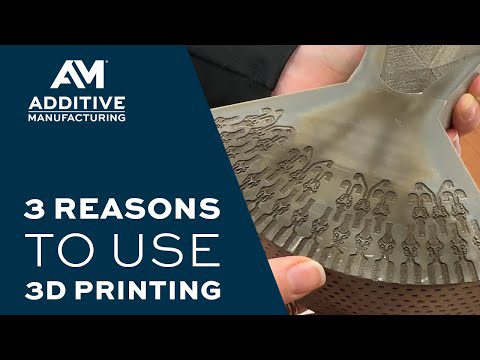
AM Media’s The Cool Parts Show recently explored Baker Hughes’ AM strategy. Their approach offers practical lessons for engineers and procurement teams. Here are three key reasons this energy leader invests in additive technology.
Reason 1: Part Consolidation Reduces Assembly Complexity
Traditional manufacturing often requires assembling multiple components. Welds, fasteners, and joints create potential failure points. Baker Hughes uses AM to consolidate parts into single, unified structures.
This approach delivers several benefits:
- Fewer assembly steps reduce labor costs
- Eliminated joints mean fewer leak paths in fluid handling
- Reduced part count simplifies inventory management
- Lighter assemblies improve operational efficiency
For energy applications where reliability is critical, consolidated designs minimize failure modes. Engineers gain freedom to optimize geometry without manufacturing constraints.
Design Freedom Enables Better Performance
Metal 3D printing processes allow internal channels and complex geometries. Traditional machining cannot achieve these features cost-effectively. Baker Hughes leverages this capability for improved fluid flow and heat management.
Reason 2: Supply Chain Resilience and Lead Time Reduction
Energy sector equipment often requires specialized components. Traditional supply chains can mean weeks or months of lead time. AM offers a path to faster, more flexible production.
Baker Hughes uses additive manufacturing to address supply chain challenges:
- Produce replacement parts on-demand versus waiting for suppliers
- Reduce inventory holding costs for low-volume spares
- Respond quickly to field failures with rapid production
- Maintain operations when traditional suppliers face disruptions
For procurement teams, this flexibility reduces risk. You’re not dependent on single-source suppliers for critical components.
Reason 3: Application-Specific Material Properties
Energy sector parts face extreme conditions. High pressures, corrosive fluids, and temperature extremes demand specific material performance. Industrial AM processes offer access to specialized alloys.
Baker Hughes selects materials matched to application requirements. This includes nickel superalloys for high-temperature service. It also includes corrosion-resistant materials for harsh chemical environments.
Material Selection Matters
Choosing the strongest 3D printing material for your application requires understanding service conditions. Work with experienced partners who can guide material selection based on your specific requirements.
Lessons for Your AM Strategy
Baker Hughes’ approach offers guidance for manufacturers evaluating additive. Start with applications where AM provides clear advantages over traditional methods.
Consider these criteria when identifying AM candidates:
- Complex geometries that require multiple machining setups
- Assemblies with many welded or fastened joints
- Low-volume parts with long lead times
- Components requiring internal channels or lattice structures
Not every part benefits from additive manufacturing. Focus on applications where the technology solves real problems.
Partner With Experienced AM Providers
Companies like JawsTec help engineers navigate material selection and design optimization. Industrial AM requires different expertise than traditional manufacturing. Working with specialists accelerates your learning curve.
Getting Started With Industrial AM
You don’t need Baker Hughes’ resources to benefit from additive manufacturing. Start with a pilot project. Identify one component that fits AM’s strengths.
Ready to explore industrial additive manufacturing for your applications? Request a quote from JawsTec to discuss your specific requirements.