
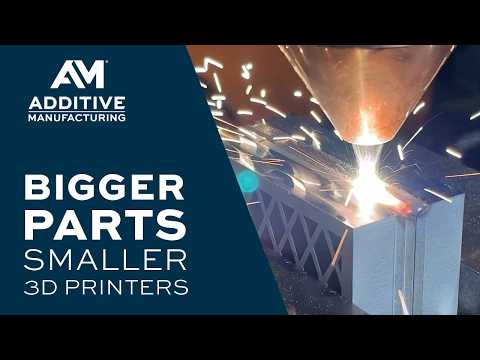
Why Build Volume Limits Slow Down Metal AM Projects
Metal 3D printing build volume restrictions frustrate engineers daily. Most industrial machines max out around 400mm in any direction. Larger parts require expensive machines that many shops cannot justify.
Synergy Mold Technologies developed a practical workaround. They join multiple printed segments into unified assemblies. This approach delivers large-scale metal parts without large-scale equipment costs.
AM Media’s Cool Parts Show recently featured this technique. Their coverage reveals how thoughtful design and joining methods unlock new possibilities for metal additive manufacturing.
How Segmented Printing Works
The concept sounds simple but requires careful execution. Engineers divide large parts into printable segments. Each segment fits within standard build volumes. Then they join segments using proven metallurgical techniques.
Key Steps in the Process
- Design parts with joining interfaces in low-stress areas
- Print segments with matching surfaces for precise alignment
- Use welding or brazing to create metallurgical bonds
- Machine and finish the joined assembly as one unit
The critical insight involves placement of joint locations. Engineers must position joints where mechanical stresses remain manageable. This requires upfront analysis during the design phase.
Benefits Beyond Size Limitations
Joining techniques offer advantages beyond simply making bigger parts. Procurement teams should understand the full value proposition.
Cost and Lead Time Advantages
- Avoid capital investment in larger machines
- Print segments simultaneously on multiple machines
- Reduce powder costs through optimized nesting
- Maintain access to standard build platform services
Multiple segments can print at once across different machines. This parallel production cuts lead times significantly. A part that seems too large for your timeline becomes achievable.
Design Considerations for Joined Metal Parts
Successful implementation requires design-for-AM thinking. Engineers must plan for joining from the start. Retrofitting existing designs creates problems.
Joint interfaces need adequate surface area for strong bonds. Alignment features help assemblers position segments correctly. Access for welding equipment must be considered early.
Thermal management during joining affects final part quality. Some alloys respond better to specific joining methods. Material selection and joining strategy should develop together. Understanding metal 3D printing processes helps engineers make informed decisions.
When This Approach Makes Sense
Not every large part benefits from segmented printing. Engineers should evaluate each application carefully.
This technique excels for tooling applications like mold inserts. It works well for prototype development of large components. Low-volume production runs justify the additional assembly steps.
High-volume production may favor other approaches. Parts requiring extreme precision across joints need extra validation. Safety-critical aerospace components demand rigorous qualification.
Industries Seeing Strong Results
Mold and die shops use this method extensively. Oil and gas equipment manufacturers benefit from larger printed components. Heavy equipment manufacturers explore segmented approaches for complex assemblies.
Working With Service Providers
Most manufacturers lack in-house metal AM capabilities. Partnering with experienced service providers accelerates adoption. Look for partners who understand both printing and joining processes.
JawsTec offers metal 3D printing services with design consultation. Their team can evaluate whether segmented approaches fit your application. Request a quote to discuss your specific requirements.
Moving Forward With Large-Scale Metal AM
Build volume limitations no longer block innovation. Joining techniques extend what metal additive manufacturing can achieve. Engineers gain flexibility without waiting for larger machines to become affordable.
Start by identifying parts where segmentation makes sense. Work with your design team to plan joint locations early. Partner with experienced service providers who understand the complete workflow.
The technology exists today. The methods are proven. Large-scale metal 3D printed parts are within reach for teams willing to think differently about how parts come together.
Sources
Source: Joining Technique Extends the Build Volume for Metal 3D Printing by AM Media — The Cool Parts Show (YouTube) — https://www.youtube.com/watch?v=VM7QFZA-MrI