
How AI Is Changing Rocket Engine Manufacturing
A combustion injector head for a rocket engine. Designed entirely by artificial intelligence. This AI-designed rocket part represents a major shift in how engineers approach complex manufacturing challenges.
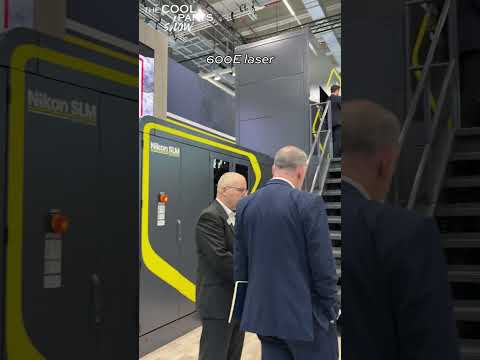
The part was created by LEAP 71 using their computational engineering tool called Noyron. It appeared at Formnext 2024 in the Nikon SLM Solutions booth. AM Media’s The Cool Parts Show featured this remarkable component.
What Makes This Injector Different
Traditional rocket injector design takes months of human engineering work. The Noyron system generates complete, manufacturable designs in hours. It considers thermal management, fluid dynamics, and structural requirements simultaneously.
The resulting geometry is extraordinarily complex. Human engineers would never create these organic flowing shapes manually. Yet every curve serves a specific engineering purpose.
Key Benefits of AI-Generated Designs
- Optimized internal cooling channels that follow ideal thermal paths
- Reduced weight while maintaining structural integrity
- Faster design iteration cycles for rapid prototyping
- Geometries impossible to achieve with conventional machining
Metal 3D Printing Makes It Possible
This injector exists because of metal 3D printing capabilities. Selective laser melting (SLM) builds the part layer by layer from metal powder. Complex internal channels print as easily as simple shapes.
The combination matters here. AI creates designs that exploit additive manufacturing’s strengths. Traditional design thinking limits parts to what CNC machines can cut.
Why This Matters for Procurement Teams
Engineers and procurement professionals should watch this space closely. AI-designed components offer measurable advantages:
- Consolidated assemblies reduce part counts and failure points
- Performance gains from mathematically optimized geometries
- Shorter lead times from design to functional prototype
- Supply chain simplification through part consolidation
Practical Applications Beyond Aerospace
Rocket engines push technology limits. But similar principles apply to industrial applications. Heat exchangers, fluid manifolds, and structural brackets all benefit from computational design.
The approach works for any part where thermal, structural, or fluid requirements drive complexity. AI finds solutions that balance competing constraints automatically.
Getting Started With Advanced Manufacturing
Your team doesn’t need AI design tools to benefit from additive manufacturing today. Understanding how print orientation affects part quality matters more for most applications.
Start with existing designs optimized for AM processes. JawsTec helps engineering teams evaluate parts for additive manufacturing feasibility. Request a quote to explore options for your specific applications.
The Future of Part Design
LEAP 71’s work signals where manufacturing is heading. Computational tools will handle routine design optimization. Engineers will focus on defining requirements and validating results.
This injector proves the concept works for demanding applications. Rocket engines tolerate no weak points. Every component must perform flawlessly under extreme conditions.
Metal additive manufacturing continues advancing rapidly. Understanding these technologies positions your team for competitive advantages. The organizations adopting AM workflows now will lead their industries tomorrow.
Sources
Source: 3D Printed Rocket Part Designed by AI: The Cool Parts Show by AM Media — The Cool Parts Show (YouTube) — https://www.youtube.com/watch?v=DpgHFpCUdIU