
Why Precision Tolerances Matter for Custom Parts
Snap-fit assemblies demand tight dimensional control. When parts must interlock reliably, every tenth of a millimeter counts. Industrial 3D printing now achieves the precision tolerances needed for demanding mechanical interfaces.
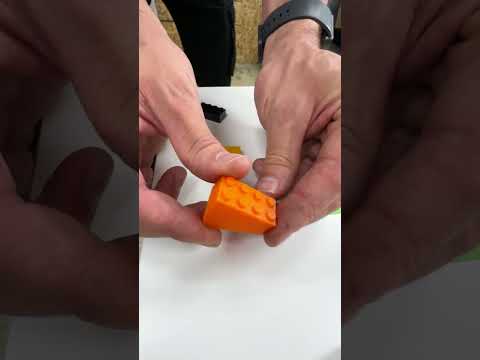
Additive manufacturing company Slant 3D recently demonstrated this capability. They produced custom interlocking brick components with consistent snap-fit engagement. This showcases what’s achievable when process parameters are optimized for dimensional accuracy.
Dimensional Requirements for Interlocking Components
Snap-fit designs typically require tolerances of ±0.1mm to ±0.2mm. Tighter specs ensure reliable assembly without excessive force. Looser tolerances create sloppy fits that compromise functionality.
Key dimensional considerations include:
- Interference fit specifications for press-fit studs
- Clearance requirements for mating cavities
- Wall thickness consistency for uniform deflection
- Surface finish quality affecting friction coefficients
These factors determine whether parts snap together cleanly or fail in assembly.
Process Selection for Tight Tolerances
Not all additive processes deliver equal precision. Material behavior, layer adhesion, and thermal management all affect dimensional outcomes.
Powder Bed Fusion Advantages
Multi Jet Fusion and Selective Laser Sintering excel at consistent tolerances. These processes produce isotropic parts with predictable shrinkage. Engineers can design with confidence when process variability is low.
Material Considerations
Nylon-based materials offer excellent dimensional stability. They resist warping during cooling and maintain tight specs across production runs. For flexible snap features, TPU materials provide controlled deflection without permanent deformation.
Design Guidelines for Snap-Fit AM Parts
Successful snap-fit designs account for process capabilities. Build orientation affects surface quality on mating faces. Orientation planning ensures critical dimensions print in optimal directions.
Design best practices include:
- Adding 0.1-0.2mm clearance beyond nominal dimensions
- Specifying minimum 1.5mm wall thickness for structural features
- Incorporating draft angles on snap hooks for easier assembly
- Designing test coupons to validate tolerances before production
Production Considerations for Procurement Teams
Batch consistency matters for interchangeable components. Parts from different builds must mate reliably. This requires process controls and quality verification protocols.
Qualification Requirements
Request dimensional inspection reports for critical features. First-article inspection validates process capability. Statistical process control data demonstrates ongoing consistency.
JawsTec maintains strict quality standards for precision components. Their production processes deliver repeatable tolerances across high-volume runs. Request a quote for your snap-fit assembly project.
When Custom AM Beats Traditional Tooling
Injection molding remains cost-effective for high volumes. But tooling costs and lead times favor additive manufacturing for several scenarios.
AM makes sense when you need custom configurations without mold changes. It excels for low-to-medium volumes where tooling amortization doesn’t pencil out. Compare AM versus injection molding economics for your specific application.
Getting Started with Precision AM Components
Define your tolerance requirements before requesting quotes. Specify which dimensions are critical versus general. Provide GD&T callouts for functional features.
Share your assembly context with your manufacturing partner. Understanding how parts interface helps optimize build orientation. Collaborative design reviews catch issues before production begins.
Sources
Source: Custom 3D Printed LEGO by Slant 3D (YouTube) — https://www.youtube.com/watch?v=3N4-VrLidX4