
Rethinking Investment Casting with 3D Printing
Investment casting creates precise metal parts. Traditional methods require molded wax patterns. These molds are expensive and slow to produce.
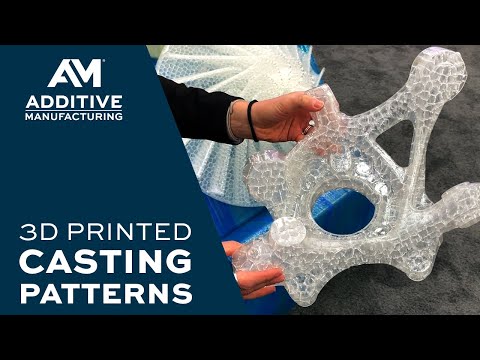
3D printed investment casting patterns offer a faster alternative. AM Media’s The Cool Parts Show recently explored how 3D Systems’ QuickCast technology transforms this process. The approach uses lightweighting strategies to reduce material and cost.
For engineers and procurement teams, this changes the economics of low-volume metal production.
What Makes QuickCast Different
QuickCast patterns are hollow structures with internal lattices. They replace solid wax patterns used in traditional casting. This design serves a critical purpose during burnout.
Standard solid patterns expand when heated. This expansion can crack ceramic shells. QuickCast’s hollow design collapses inward instead. The shell stays intact.
Key Design Elements
- Thin outer shells minimize material volume
- Internal honeycomb structures provide support during handling
- Strategic drain holes allow uncured resin removal
- Controlled collapse points prevent shell damage during burnout
Material and Cost Advantages
Lighter patterns use less resin material. This reduces direct printing costs. But the savings extend further.
Less material means faster print times. Faster prints mean higher machine throughput. Post-processing becomes quicker too.
Comparing Pattern Approaches
- Conventional wax: Requires tooling investment, long lead times
- Solid 3D printed: No tooling, but high material use and burnout risks
- QuickCast hollow: No tooling, reduced material, safer burnout
For prototype quantities and bridge production, the math favors printed patterns. Tooling costs disappear entirely.
When to Choose Printed Casting Patterns
This approach excels in specific scenarios. Understanding them helps procurement teams make smart decisions.
Low volumes benefit most. When you need 1-50 castings, tooling costs dominate traditional methods. Printed patterns eliminate that barrier. Design iterations become practical too.
Complex geometries also favor this method. Intricate internal features that would require multi-piece wax tooling print as single patterns. This reduces assembly labor and potential defects.
Ideal Applications
Aerospace components often use this workflow. Turbine blades and structural brackets benefit from casting’s material properties. Medical implants represent another strong fit. Custom or low-volume orthopedic devices need casting’s biocompatible alloys.
Industrial equipment manufacturers use it for replacement parts. Legacy components without existing tooling can be reverse-engineered and cast.
Design Considerations for Engineers
Successful QuickCast patterns require thoughtful design. Print orientation matters significantly for surface quality on critical faces.
Wall thickness must balance strength and collapse behavior. Too thick and burnout risks increase. Too thin and handling damage occurs. Typical walls range from 1-2mm depending on part size.
Drain holes need strategic placement. They must allow complete resin evacuation without compromising pattern function.
Getting Started with Printed Patterns
Teams new to this workflow should start with non-critical parts. Validate the process before committing production components. Work with experienced service providers who understand both printing and foundry requirements.
JawsTec offers industrial resin printing services suitable for investment casting patterns. Their team can advise on material selection and design optimization.
The combination of additive manufacturing and traditional casting unlocks new possibilities. Engineers gain design freedom. Manufacturers gain speed. Everyone benefits from reduced costs on low-volume metal parts.
Sources
Source: “Lightweighting” for 3D Printed Investment Casting Patterns by AM Media — The Cool Parts Show (YouTube) — https://www.youtube.com/watch?v=WOGECf9COBA