
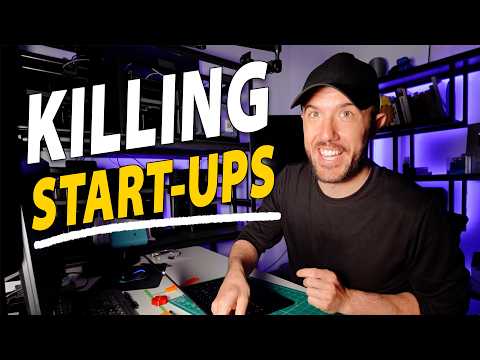
Why Building Everything In-House Can Hurt Your Business
Vertical integration sounds appealing. Control every step. Own the entire process. But for many manufacturers, this strategy backfires badly.
In a recent episode of the Slant 3D Podcast, host Gabe Mendoza breaks down why vertical integration in additive manufacturing often becomes a costly mistake. His insights apply directly to engineers and procurement teams evaluating production strategies.
The Hidden Costs of Vertical Integration
Building your own machines and manufacturing systems requires massive capital. You need specialized engineers. You need maintenance teams. You need continuous R&D investment.
These resources get pulled from your core business. Instead of improving products, you’re debugging equipment. Instead of serving customers, you’re troubleshooting production lines.
Consider these common pitfalls:
- Capital tied up in equipment development rather than market growth
- Engineering talent diverted from product innovation to machine maintenance
- Slower response to market changes due to rigid infrastructure
- Higher risk exposure when technology evolves rapidly
When Outsourcing Makes Strategic Sense
Professional 3D printing service bureaus exist precisely to handle production complexity. They invest in equipment. They maintain expertise. They absorb technology risk.
This lets your team focus on design and customer value. You access industrial processes like Multi Jet Fusion or Selective Laser Sintering without capital expenditure.
Outsourcing provides several advantages for production teams:
- Predictable per-part costs without equipment depreciation
- Access to multiple printing technologies for different applications
- Faster scaling without facility expansion
- Reduced technical debt as printing technology advances
Evaluating Your Manufacturing Strategy
Not every company should outsource everything. The key is honest assessment. What truly differentiates your business? That’s where you invest.
For most product companies, manufacturing isn’t the differentiator. Design, customer relationships, and market knowledge create competitive advantage. Production is a supporting function.
Questions for Your Team
Before committing to vertical integration, ask these questions. Does building in-house capability improve your product? Will customers pay more because you own the machines?
Usually, customers care about quality, speed, and reliability. They don’t care who owns the printer. Partner with established service providers to deliver what customers actually value.
Building Flexible Production Networks
Modern supply chains favor agility over control. Working with specialized partners creates resilience. You can shift between technologies as requirements change.
Industrial AM service providers like JawsTec invest continuously in equipment and expertise. They maintain quality systems and certifications. Partnering lets you leverage their infrastructure without owning it.
This approach particularly benefits companies comparing industrial 3D printing vs injection molding. Different volumes and geometries favor different approaches. Flexibility lets you optimize for each project.
Making the Right Build vs Buy Decision
Vertical integration isn’t inherently bad. But it must serve clear strategic goals. Most startups and growing manufacturers benefit more from operational focus.
Let partners handle production complexity. Concentrate your resources where they create customer value. This principle applies whether you’re producing prototypes or production parts.
Ready to explore outsourced production? Request a quote from JawsTec to see how partnering compares to building in-house capability.