
Last Updated:
Multi Jet Fusion (MJF) 3D printing is a relatively new technology in the additive manufacturing world, introduced less than a decade ago. Despite its youth, it has quickly become a premier choice for producing high-quality parts thanks to its speed, strength, and versatility. Below, we break down the key advantages of MJF 3D printing.
1. Faster Print Times
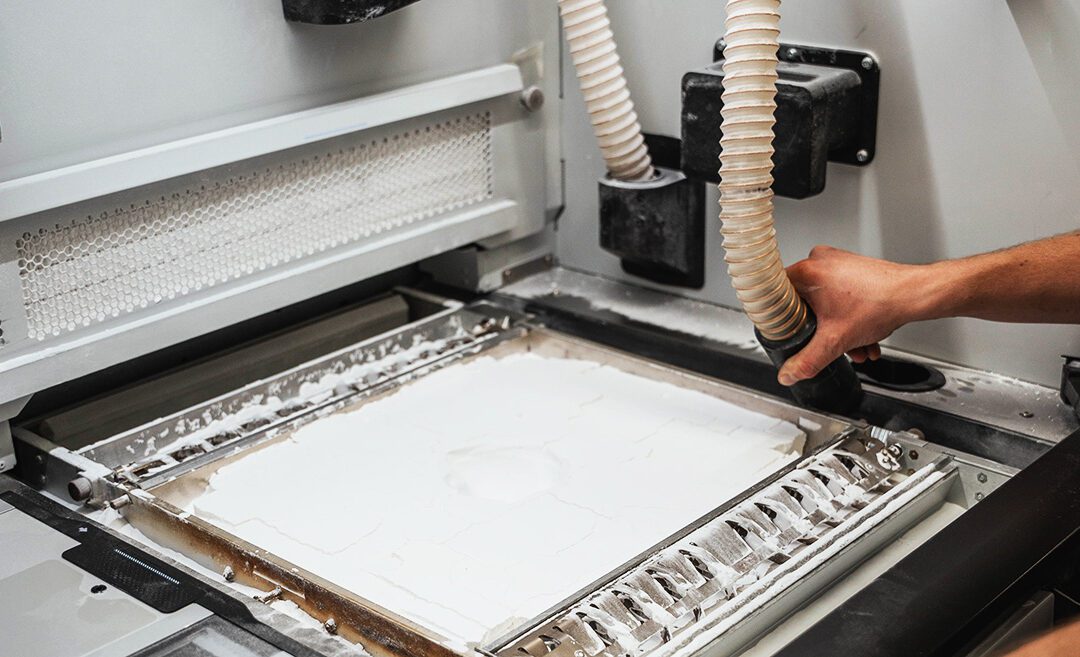
MJF is known for its efficiency and quick turnaround. As a powder-bed-based process, it doesn’t require traditional support structures—the parts are printed within the surrounding powder. This eliminates extra setup time and reduces post-processing work.
On average, a single MJF build can take around 10 hours to complete. While that may sound lengthy, it’s actually an advantage because multiple parts can be printed in a single build, optimizing production speed and throughput.
2. Material Recycling and Cost Savings
One of MJF’s strengths is its ability to reuse material. Typically, each build uses a mix of 80% fresh powder and 20% recycled material.
This approach has two major benefits:
-
Lower Waste → Reduces leftover material and environmental impact.
-
Cost Efficiency → Reusing material helps keep production costs lower without sacrificing quality.
3. Exceptional Material Strength
MJF primarily uses nylon-based powders such as PA12 and PA11, both known for their strength and durability. These materials can withstand 50–60 MPa of tensile strength—comparable to the compressive strength of high-strength concrete.
Additional benefits of MJF materials include:
-
High Chemical Resistance → Suitable for industrial and automotive applications.
-
Thermal Stability → Maintains strength even in elevated temperatures.
-
Versatility → Ideal for both functional prototypes and end-use parts.
4. Advanced Customization Options
Another major advantage of MJF is its high level of customization. Parts are naturally gray and slightly grainy when printed, but they can be finished in a variety of ways depending on the application:
-
Dyeing → Available in multiple colors.
-
Polishing → Achieves a smoother surface finish.
-
Vapor Polishing → Not only smooths the surface but also strengthens the part and enhances its appearance.
Whether you want a raw, functional prototype or a polished, customer-ready product, MJF can adapt to your needs.
Conclusion
MJF shares similarities with other 3D printing methods but stands out due to its speed, material strength, cost efficiency, and customization options. From rapid prototyping to full-scale production, MJF offers a reliable, versatile solution for industries looking to produce durable and detailed parts quickly. Ready to get an instant quote? Check our MJF design guide to make sure your part is ready.