
Why Ramjets Showcase Metal 3D Printing’s Strengths
Ramjet engines push traditional manufacturing to its limits. These high-speed propulsion systems require complex internal geometries. Metal 3D printing aerospace applications solve challenges conventional methods cannot.
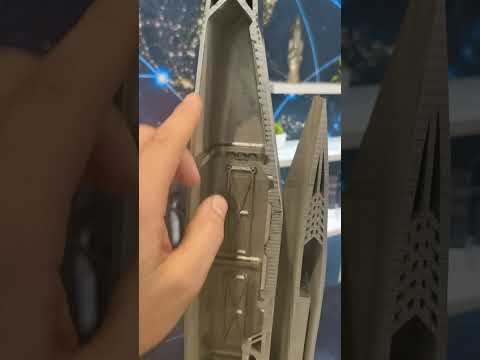
Industrial 3D printing company Slant 3D recently highlighted a ramjet component at IMTS. The part demonstrates why engineers increasingly choose additive manufacturing for aerospace propulsion. Internal channels and flowing surfaces make this design nearly impossible to machine.
Design Freedom for Internal Channels
Ramjets need precise internal airflow paths. Traditional machining struggles with curved internal passages. Metal additive manufacturing builds these features layer by layer.
The showcased part features smooth internal transitions. Air flows through optimized curves rather than stepped passages. This improves combustion efficiency and reduces turbulence.
Key Design Advantages
- Internal channels with variable cross-sections
- Smooth flowing surfaces impossible to machine
- Integrated cooling passages within walls
- Optimized airflow geometry for performance
Part Consolidation Reduces Assembly Risk
Traditional ramjet manufacturing requires multiple machined pieces. Each joint creates potential failure points. Welded or bolted connections add weight and complexity.
Metal 3D printing consolidates assemblies into single components. Fewer parts mean fewer failure modes. This matters critically in aerospace and defense applications.
The ramjet design eliminates traditional joint lines entirely. What once required welding multiple sections now prints as one piece. Engineers gain reliability while reducing inspection requirements.
Velo3D Technology for Support-Free Printing
The featured ramjet component was produced using Velo3D systems. This technology specializes in low-angle overhangs and internal features. Traditional metal printing requires extensive internal supports.
Manufacturing Benefits
- Reduced post-processing time and cost
- Cleaner internal surfaces without support marks
- Access to previously impossible geometries
- Better surface finish on critical flow paths
Support removal in internal channels often damages surfaces. Support-free printing preserves designed surface quality. This directly impacts component performance.
Material Considerations for Propulsion
Ramjets operate at extreme temperatures and pressures. Material selection determines component lifespan. Metal additive manufacturing offers high-performance alloy options.
Inconel and titanium alloys handle thermal cycling well. These materials machine poorly but print effectively. Additive manufacturing makes difficult materials more accessible. For projects requiring metal 3D printing capabilities, understanding material options is essential.
Design-for-AM Principles in Action
This ramjet demonstrates core design-for-additive principles. Engineers optimized geometry specifically for layer-based manufacturing. The design exploits AM strengths rather than mimicking machined parts.
Self-supporting angles reduce build time. Internal features follow printable guidelines. Wall thicknesses suit the chosen process parameters. Understanding why orientation matters helps engineers optimize similar designs.
Practical Takeaways for Engineering Teams
Aerospace propulsion components benefit significantly from metal AM. The technology suits parts with complex internal geometries. High-value, low-volume production makes additive cost-effective.
Procurement teams should evaluate total manufacturing cost. Include machining, assembly, and inspection in comparisons. Single printed parts often beat multi-piece assemblies economically.
JawsTec works with engineering teams on industrial applications. Our team helps optimize designs for additive manufacturing. Request a quote to discuss your project requirements.
When Metal 3D Printing Makes Sense
Not every component suits additive manufacturing. Evaluate your application against these criteria:
- Complex internal channels or cooling passages
- Part consolidation opportunities
- Difficult-to-machine materials required
- Low-to-medium production volumes
- High performance-to-weight requirements
Ramjets check every box on this list. Your components may share similar characteristics. Consider additive manufacturing early in the design process for maximum benefit.
Sources
Source: Design for 3D printing on a ramjet. #velo3d #3dprinting #imts by Slant 3D (YouTube) — https://www.youtube.com/watch?v=WwviZNz9_Vs