
Last Updated:
Prosthetic development has long required a balance between precision, comfort, and durability. As technology advances, new manufacturing methods are changing how these devices are designed and produced. One of the most impactful of these methods is 3D printing, which allows for faster iteration, greater customization, and improved accessibility. While not a complete replacement for traditional prosthetic manufacturing, 3D printing has become a powerful tool in both prototyping and early-stage production, helping medical professionals and engineers deliver better-fitting solutions in less time.
Why 3D Printing?
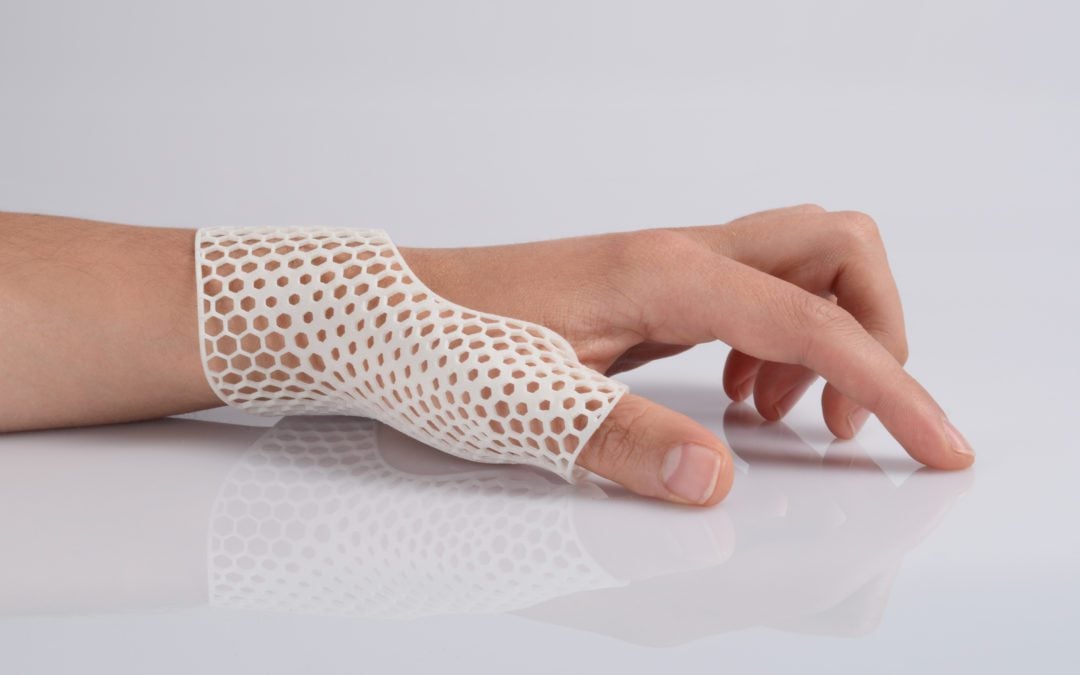
3D printing has emerged as a strong solution for prosthetic development due to its speed, adaptability, and ability to support customization. 3D printed custom prosthetics allow medical professionals and engineers to design devices that are tailored to each patient’s anatomy without the long lead times associated with traditional manufacturing.
Traditional prosthetics often require extended timelines because of tooling, manual fabrication, and multiple revision cycles. In contrast, many industrial 3D printing processes can produce functional components in as little as 10–24 hours. Industry estimates suggest that receiving a fully customized prosthetic through traditional methods can take three to five weeks, depending on complexity and fit adjustments.
By enabling custom prosthetics with 3D printing, these timelines can often be reduced significantly. When combined with proper testing, fitting, and post-processing, rapid prosthetics with 3D printing can be delivered in nearly half the time—without sacrificing performance or fit.
How It Works
While 3D printing may appear simple on the surface, creating custom prosthetics with 3D printing is a highly collaborative and technical process. It typically begins with a patient evaluation to determine functional needs, comfort requirements, and anatomical constraints.
A 3D scanner is commonly used to capture precise measurements of the patient. This scan is converted into a digital model that can be reviewed, adjusted, and refined. Engineers and medical professionals work together to optimize the design, ensuring the prosthetic fits correctly and performs as intended. Once finalized, the digital file is sent to a 3D printer for production.
This workflow supports a wide range of 3D printed custom prosthetics, including prosthetic limbs, braces, dental molds, and orthotic devices.
What Materials Are Used?
The growing range of available materials has made custom prosthetics with 3D printing more versatile than ever. Industrial processes such as Selective Laser Sintering (SLS) and Multi Jet Fusion (MJF) are commonly used due to their strength, durability, and consistency.
These processes produce parts well suited for functional testing and real-world use, offering strong mechanical properties and resistance to wear. Nylon-based polymers are frequently selected for 3D printed custom prosthetics because they balance strength, flexibility, and lightweight performance—key factors for patient comfort and long-term usability.
What Are the Benefits?
One of the largest benefits of rapid prosthetics with 3D printing is the ability to iterate quickly. Designs can be adjusted and reprinted without expensive tooling changes, making it easier to refine fit, improve comfort, and respond to patient feedback.
Turnaround time is another major advantage. Industrial 3D printing processes can produce parts in hours rather than weeks, allowing faster delivery and improved patient outcomes. Digital files can also be stored and reused, making replacements or future modifications far more efficient when producing 3D printed custom prosthetics.
How Does It Compare to Traditional Methods?
Traditional prosthetic manufacturing often relies on labor-intensive molding, casting, and machining. While effective, these methods are slower to adapt to design changes and can be costly for one-off or highly customized devices.
Custom prosthetics with 3D printing shift much of the complexity into the digital design phase. Once a design is validated, production becomes faster and more repeatable. However, traditional manufacturing still plays an important role, particularly for large-scale production or applications requiring materials not yet widely supported by additive manufacturing.
Weak Points
Although 3D printed custom prosthetics have advanced significantly, 3D printing is not yet positioned to fully replace traditional manufacturing for strictly end-use prosthetics in all cases. The main challenges include long-term durability, material certification, regulatory approval, and large-scale production consistency.
Medical prosthetics often require years of validated performance data and strict compliance with regulatory standards. Many materials used for custom prosthetics with 3D printing are still undergoing long-term testing, especially for devices subjected to constant load, impact, or daily wear over extended periods.
This remains an active area of development. Improvements in material science, print process control, and post-processing techniques are rapidly closing the gap between traditional and additively manufactured prosthetics.
While 3D printing may not always be used for final, patient-ready devices, it is widely adopted for prototype and pre-production prosthetics. These prototypes allow clinicians and engineers to test fit, comfort, range of motion, and functionality before selecting a final manufacturing method. This approach reduces risk, shortens development cycles, and ultimately improves the performance of end-use prosthetics.
Pros and Cons of 3D Printed Custom Prosthetics
Pros
-
Faster production and shorter lead times
-
High levels of customization
-
Rapid design iteration and refinement
-
Reduced tooling and setup costs
-
Digital file storage for easy replacement
Cons
-
Limited material options compared to traditional methods
-
Scaling production can be challenging
-
Regulatory and testing requirements can slow adoption
-
Not ideal for all long-term load-bearing applications
What’s Next for 3D Printing in Prosthetics?
The future of rapid prosthetics with 3D printing is centered on refinement and integration. As materials, printer reliability, and process consistency improve, the range of viable end-use applications will continue to expand.
With increased adoption, manufacturers and medical professionals will better understand where custom prosthetics with 3D printing deliver the most value—and where traditional methods remain necessary. Over time, this balance will lead to more efficient workflows, improved patient outcomes, and broader access to personalized prosthetic solutions.