
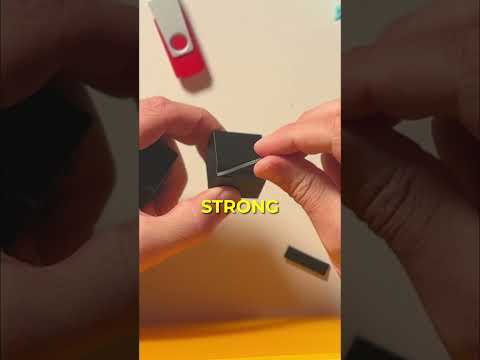
Why Layer Lines Matter for Functional Parts
Every 3D printed part has layer lines. These lines create directional strength properties that engineers must understand. Getting layer line orientation right can mean the difference between a part that works and one that fails.
Industrial 3D printing company Slant 3D recently demonstrated this with leaf spring testing. Their findings offer practical guidance for anyone designing load-bearing printed parts. The results challenge some common assumptions about print orientation.
How Layer Lines Affect Part Strength
3D printed parts are strongest along their layer lines. They are weakest perpendicular to those lines. This happens because layers bond to each other during printing.
Think of it like wood grain. Wood splits easily along the grain but resists force across it. Layer lines work similarly. Force applied along layer lines distributes across the entire layer. Force against layer lines stresses the weaker bonds between layers.
Key Strength Principles
- Parts resist force best when load runs parallel to layer lines
- Layer bonds are the weakest point in most printed parts
- Orientation during printing determines where layer lines fall
- The same geometry can perform differently based on print orientation
Leaf Spring Testing Results
Slant 3D tested leaf springs printed in different orientations. Leaf springs flex repeatedly under load. They make excellent test cases for understanding layer line effects on functional parts.
Springs printed with layers aligned to the flex direction performed best. The load traveled along layer lines rather than pulling them apart. This orientation maximized the material’s natural strength.
Poorly oriented springs failed faster. Layer bonds separated under repeated stress. The geometry was identical but performance differed significantly.
Practical Design Guidelines
- Identify primary load directions early in design
- Orient parts so layers align with those load paths
- Avoid placing layer bonds at high-stress points
- Consider how flex and fatigue will stress layer bonds
- Test critical parts in intended orientation
Applying This to Industrial Parts
Understanding why orientation matters in 3D printing helps engineers design better functional parts. This knowledge applies across additive manufacturing technologies.
Selective laser sintering and Multi Jet Fusion both create layer-based parts. Even these industrial processes show orientation-dependent strength. Engineers should communicate critical load directions when ordering parts.
When to Prioritize Orientation
Not every part needs perfect orientation. Cosmetic prototypes and low-stress components work fine in any direction. Focus orientation planning on these part types:
- Load-bearing structural components
- Parts subject to repeated flexing or fatigue
- Snap fits and living hinges
- End-use production parts
Working With Your Print Service
Most print services optimize for nesting efficiency by default. This maximizes parts per build but may not optimize strength. Communicating your requirements prevents problems.
Include load direction notes with your part files. Specify if certain orientations are required. Ask about orientation options during quoting. JawsTec’s team can advise on optimal orientation for your specific application when you request a quote.
Beyond Orientation: Other Strength Factors
Layer line orientation is one factor among many. Material selection matters enormously. Process parameters affect layer bonding quality. Wall thickness and infill patterns also play roles.
Engineers should consider all these factors together. Choosing the strongest 3D printing material for your application works alongside smart orientation planning.
The best results come from designing with additive manufacturing in mind from the start. Layer lines become a feature to use rather than a limitation to work around.
Sources
Source: 3D Printing Strength Leaf Springs & Layer Line Secrets! by Slant 3D (YouTube) — https://www.youtube.com/watch?v=RUAEjzNR0ho