
Why Reducing Supports Matters for Production
3D print supports add cost, time, and post-processing labor. For production runs, these factors multiply quickly. Smart design choices can eliminate most supports entirely.
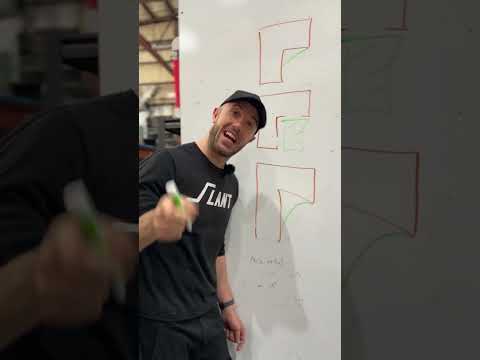
Industrial 3D printing service Slant 3D recently shared insights on overhang management. Their approach focuses on design-stage decisions that prevent support needs altogether. This matters for engineers and procurement teams evaluating additive manufacturing costs.
Understanding the 45-Degree Rule
Most 3D printing processes handle overhangs up to 45 degrees without supports. Beyond this angle, layers lack sufficient contact with previous layers. The result is drooping, curling, or failed prints.
However, many designers add supports unnecessarily. They treat every overhang as a problem requiring intervention. This wastes material and increases finishing time.
When Supports Actually Help
Supports serve specific purposes in industrial applications:
- Horizontal bridges spanning large gaps
- Flat overhangs exceeding 60-70 degrees
- Features requiring tight dimensional tolerances
- Parts where surface finish on underside matters
Design Strategies That Eliminate Supports
Experienced designers build overhang tolerance into their models. This approach is called Design for Additive Manufacturing (DfAM). It reduces production costs significantly.
Consider part orientation early in your design process. A 60-degree overhang in one orientation becomes a 30-degree angle when rotated.
Key Design Modifications
Several techniques reduce or eliminate support requirements:
- Add chamfers instead of sharp horizontal transitions
- Use teardrop shapes for horizontal holes
- Design self-supporting angles into structural features
- Split complex parts into support-free assemblies
- Consider powder-bed processes for complex geometries
Process Selection Impacts Support Needs
Different industrial processes handle overhangs differently. Powder-bed technologies like Multi Jet Fusion and Selective Laser Sintering use unfused powder as natural support. This enables complex geometries impossible with other methods.
Resin and filament processes require designed supports for steep overhangs. Process selection should consider geometry requirements alongside material needs.
Cost Implications for Production
Support removal adds direct costs to every part. These include:
- Additional material consumption
- Extended print times
- Manual post-processing labor
- Surface finishing on support contact points
- Increased scrap rates from removal damage
For production volumes, these costs compound rapidly. A 20% reduction in support material can yield significant savings.
Practical Steps for Engineers
Start by reviewing existing designs for support reduction opportunities. Question whether each overhang truly needs support. Test tolerance limits with sample prints before committing to production.
Work with your manufacturing partner early. Services like JawsTec can advise on design modifications that reduce costs. Their engineers understand process-specific overhang limits.
Documentation and Standards
Create internal guidelines for overhang angles by process type. Document successful support-free features for future reference. This institutional knowledge speeds future design work.
When preparing files for production, review support-free printing strategies. Small design changes often eliminate support needs entirely.
Getting Started
Evaluate your current designs for support reduction opportunities. Consider whether different processes might enable simpler geometry. Request a quote from JawsTec to compare production costs across processes and design variations.
Smart overhang design isn’t just about technical capability. It’s about manufacturing efficiency that scales with your production needs.
Sources
Source: Stop Using Supports for Overhangs by Slant 3D (YouTube) — https://www.youtube.com/watch?v=sk05HL0RLII