
If you have ever shopped for flexible 3D-printed parts, you have run into numbers like 86A, 50A, and 30A. Those numbers are Shore hardness ratings, and they are one of the fastest ways to tell how soft or firm a material will feel in your hands.
In this guide, we break down what Shore hardness is, what it does and does not tell you, and how two popular flexible materials compare: SLS TPU and TEPU. We also cover the TPU parts and Shore hardness options JawsTec offers, so you can pick the right one for your project.
What Is Shore Hardness?
Shore hardness is a scale used to rate how hard or soft a rubber, elastomer, or plastic is. It was developed by Albert Shore, and it is still the standard way to describe flexible materials.
There are several Shore scales. The two you will see most are:
Shore A, used for soft to medium-firm flexible materials such as rubber, silicone, and flexible polyurethane.
Shore D, used for harder, more rigid plastics.
Ratings run from 0 to 100. A lower number means a softer material, and a higher number means a firmer one. For 3D printed elastomers and TPU parts, you will almost always be looking at the Shore A scale.
As a rough guide, a 30A material feels very soft and squishy, like a soft gel. A 50A material feels like a soft rubber gasket or eraser. An 86A material feels firm but still bendable, about the same as a shoe heel.
What Does Shore Hardness Measure?
Shore hardness measures resistance to indentation. A tool called a durometer presses a small spring-loaded pin into the surface of the material. The deeper the pin sinks in, the softer the material and the lower the number. Testing is commonly done following standards like ASTM D2240.
That is useful, but it is also a narrow measurement. Shore hardness does not directly tell you:
How strong the material is when stretched or pulled (tensile strength)
How well it resists tearing
How well it bounces back after being compressed (compression set)
How it handles UV light, chemicals, or temperature
Two materials can share the same Shore A rating and still behave very differently in the real world. Use Shore hardness as your starting point, then look at the other properties that matter for your application.
TPU vs. TEPU: What Is the Difference?
Both TPU and TEPU are flexible, rubber-like polyurethane materials. The big differences come down to how the parts are made and how soft the material is.
SLS TPU
TPU stands for thermoplastic polyurethane. At JawsTec, our SLS TPU parts are printed with selective laser sintering, a powder-based process that fuses material layer by layer without needing support structures. Our TPU has a Shore hardness of 86A.
That makes SLS TPU a good all-around choice when you need a part that bends and flexes but still holds up to real use. It offers strong chemical resistance, good tolerance for low temperatures, and it can be dyed in many colors. It is a popular material for tubes, braces, grips, bumpers, and other durable functional TPU parts. Typical specs on our TPU page include a 1 mm minimum wall thickness and a lead time of about 10 business days.
You can learn more on our TPU 3D printing service page (https://www.jawstec.com/thermoplastic-polyurethane-3d-printing-service/) or in our guide to TPU applications and printing (https://www.jawstec.com/3d-printing-tpu/). To see how SLS works overall, visit our SLS 3D printing service page (https://www.jawstec.com/sls-3d-printing-service/).
TEPU
TEPU is a family of polyurethane-based elastomers printed with Vision Controlled Jetting (VCJ), a process that jets fine droplets of material with real-time inspection for very high accuracy. JawsTec offers two grades, and both are much softer than standard TPU:
TEPU 30A is a very soft elastomer with a rubber-like feel. It is well suited to soft cushions, human-facing devices, and medical models.
TEPU 50A is a medium-soft elastomer that balances flexibility with strength. It offers excellent compression resistance, UV stability, and chemical resistance, which makes it a strong fit for seals, gaskets, cushions, and robotics components.
Because of the VCJ process, TEPU parts can be produced with very fine detail. Our TEPU listing shows XY tolerances of about +/- 40 microns, walls resolved as thin as 0.1 mm, a maximum part size of 450 x 237 x 200 mm, and a typical lead time of 4 to 5 business days.
Explore the full details on our TEPU material page and learn more about the technology on our Vision Controlled Jetting page.
TPU vs. TEPU at a Glance
Shore hardness: TPU is 86A. TEPU is 30A or 50A.
Feel: TPU is firm and flexible. TEPU is soft and rubber-like.
Process: TPU uses SLS (powder-based). TEPU uses VCJ (jetted elastomer).
Detail: TPU works well for functional parts with walls of 1 mm and up. TEPU can capture very fine features and thin walls.
Best strengths: TPU offers toughness and chemical resistance. TEPU offers softness, low compression set, and UV and chemical resistance.
Typical lead time: TPU is about 10 business days. TEPU is 4 to 5 business days.
TPU Parts and Shore Hardness Options at JawsTec
JawsTec is a U.S.-based TPU 3D printing service for prototypes, low-volume runs, and production parts. Here is the full lineup of flexible materials you can order today, from soft to firm.
TEPU 30A (VCJ): Very soft, rubber-like elastomer. Best for soft cushions, human-facing devices, and medical models.
TEPU 50A (VCJ): Medium-soft elastomer with excellent compression resistance and UV stability. Best for seals, gaskets, cushions, and robotics components.
SLS TPU, Shore 86A: Firm but flexible thermoplastic polyurethane. Best for tubing, braces, grips, bumpers, and other durable functional parts.
INFINAM TPC 8008 P (SLS): A rubber-like thermoplastic copolyester that is sturdy and stable across changing temperatures and outdoor conditions. It is a good fit for shoe soles, medical devices, and air hoses or tubing when you need extra strength. It has a recommended wall thickness of 1 mm or more, a lead time of about 10 business days, and a maximum part size of 400 x 400 x 400 mm. See our INFINAM TPC 8008 P page.
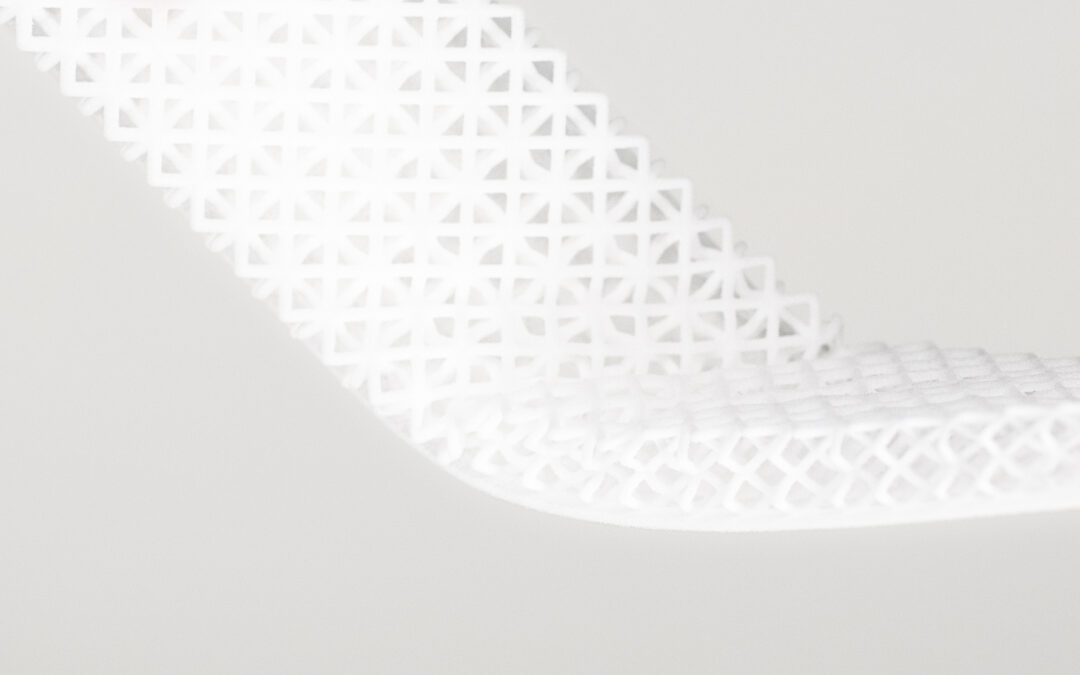
Want to change how soft a TPU part feels without changing materials? SLS TPU can be tuned through part design. Lattice structures can adjust flexibility and cushioning, so one 86A material can act softer or firmer depending on your geometry. Our SLS TPU material page has more details.
TPU parts can be finished raw, tumbled, polished, or vapor polished, and SLS TPU can be dyed in many colors. To order, upload your CAD file (.stl, .obj, .stp, or .3mf) to our instant quote tool, pick your material, color, finish, and quantity, and check out online. Your files stay 100 percent confidential. Need help preparing a model? We also offer 3D design services.
What Works Best for My Project?
Here is a simple way to decide.
Choose SLS TPU if your part needs to be flexible but firm. Think of a part that gets bent, snapped, or handled often, like a hinge, a bumper, a protective cover, tubing, or a wearable brace. If you want a durable, affordable option in a wide range of colors, SLS TPU is a great place to start.
Choose TEPU 50A if you need a true rubber-like part. Seals, gaskets, grommets, cushions, and soft robotic components all benefit from its low compression set and UV and chemical resistance. It is a strong alternative to molded rubber or silicone when you need small quantities or fast prototypes.
Choose TEPU 30A if softness is the priority. Comfort-focused, skin-contact, or squishy parts are where it shines. Keep in mind that softer materials have lower tensile strength, so they are not the best pick for parts under heavy tension. Neither TEPU grade is biocompatible.
Choose INFINAM TPC 8008 P if you need a flexible part with extra strength that will see harsh environments or big temperature changes.
If you are still unsure, ask yourself three questions. How soft does the part need to feel? Will it be compressed, stretched, or bent most often? Will it be exposed to sunlight, chemicals, or wide temperature swings? Your answers usually point clearly to one material.
Not sure yet? Our sample set lets you feel the materials in person, and our team is happy to help you compare options, contact us today.
Frequently Asked Questions
What Shore hardness is JawsTec’s TPU?
Our SLS TPU has a Shore hardness of 86A.
What Shore hardness options does JawsTec offer for flexible parts?
We offer TEPU in 30A and 50A for soft, rubber-like parts, and SLS TPU at 86A for firmer, durable parts. We also offer INFINAM TPC 8008 P for strong, flexible parts.
Is TEPU softer than TPU?
Yes. TEPU is offered in 30A and 50A, both considerably softer than 86A TPU.
What finishes are available for TPU parts?
We offer raw, tumbled, polished, and vapor polished finishes, and SLS TPU can be dyed in many colors.
Can I use TPU parts for prototypes and production?
Yes. SLS TPU works for one-off prototypes as well as low-volume production. See our rapid prototyping page for more.
Where can I see all the materials you offer?
Browse our full 3D printing materials list.
Get Your TPU Parts Printed
Whether you need firm, durable TPU parts or soft, precise TEPU elastomer parts, JawsTec makes it easy. Upload your CAD file to get an instant quote, choose your material, and we will take it from there.
Last Updated: